
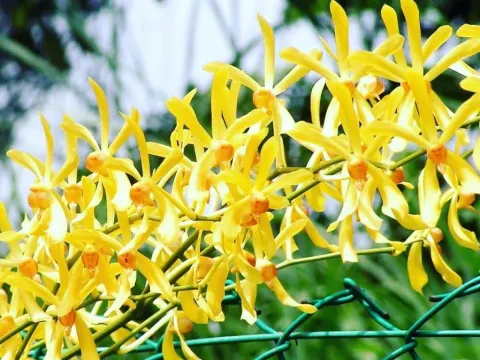
Aranthera
x Aranthera Hort.
Aranthera (x Aranthera) is a complex intergeneric orchid hybrid created by crossing members of the genera Arachnis and Renanthera. Belonging to the Orchidaceae family, these plants are highly prized in floriculture for their vibrant, star-shaped flowers and robust, upright growth habit.
What the section contains
Aranthera
Native to the tropical regions of Southeast Asia, Aranthera species are typically epiphytic in nature. In a commercial or home setting, they require an open, well-draining medium like bark or charcoal to ensure sufficient oxygen reaches their fleshy, thickened roots.
High light intensity is essential for promoting flowering in these orchids. While they thrive in bright, filtered light, direct afternoon sunlight should be mitigated to prevent leaf scorch, which can permanently damage the foliage and lower the market value of the plant.
The optimal temperature range for Aranthera is between 22 and 30 degrees Celsius. These orchids are tropical by nature and cannot tolerate prolonged exposure to cool temperatures, which significantly hampers their metabolic processes and flower induction.
Humidity management is a key aspect of their agronomy, requiring levels between 70% and 80%. Proper ventilation must be maintained at all times to simulate the natural airflow of their native habitats and to prevent the colonization of pathogenic microorganisms.
Scale insects are a frequent nuisance for Aranthera, often attaching themselves to the undersides of leaves or along the flower stems. Mechanical removal combined with systemic insecticidal soap treatment is the most effective way to manage these populations.
Bacterial soft rot represents a major threat, particularly in greenhouses with suboptimal hygiene. It is characterized by foul-smelling, mushy lesions that spread rapidly; affected parts must be excised, and the plant must be kept dry until the wound heals.
Spider mites can become problematic during periods of low humidity or high heat. These tiny pests pierce the leaf epidermis, causing a stippled appearance, and can be controlled by increasing ambient moisture and using targeted acaricides.
Root rot is almost exclusively caused by overwatering or the use of decomposed potting media that loses its structural integrity. Regular repotting is necessary to maintain the health of the root system and ensure proper nutrient uptake.
Botrytis petal blight is a fungal infection that manifests as small brown spots on open flowers, especially in humid and stagnant air. Reducing the humidity around the blooms and improving airflow is the primary method for preventing this fungal disease.