
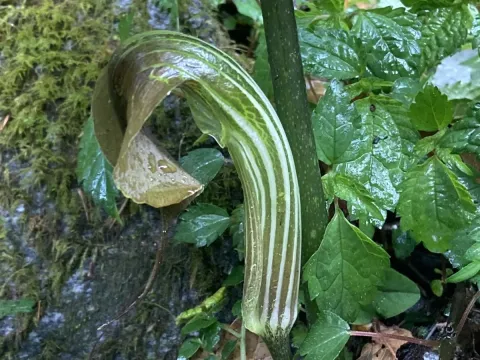
Arisaema utile
Arisaema utile
Sowing seeds of Arisaema utile is best done in autumn for natural winter stratification or in late winter under controlled cold greenhouse conditions. The seeds require a period of cool temperatures to break dormancy and trigger successful germination.
What the section contains
Arisaema utile
Seeds should be sown at a depth of 1–2 centimeters in a loose, well-draining substrate. Using a high-quality soil mix rich in peat or leaf mold ensures the necessary moisture retention while allowing for adequate aeration around the seed.
Germination can be a slow process, sometimes taking several months depending on environmental conditions. Consistent moisture levels must be maintained throughout this period, while avoiding overly waterlogged soil that could cause the seeds to rot before sprouting.
Once seedlings have developed their first true leaves, they should be carefully pricked out into individual pots. Extreme caution is required during this process to avoid damaging the delicate root systems, which are prone to shock if handled roughly.
Vegetative propagation is achieved through the division of daughter tubers during the dormant season. The tubers should be replanted immediately after separation, placed at a depth of 5–10 centimeters in a prepared, nutrient-rich garden bed.
Arisaema utile is a fascinating herbaceous perennial belonging to the Araceae family. It is native to the high-altitude regions of the Himalayas, where it thrives in shaded, cool, and moist forest environments.
The plant requires a slightly acidic, light, and fertile soil structure. Excellent drainage is critical, as the tubers will quickly decay if trapped in heavy, water-retaining clay soils, especially during the colder months of the year.
In terms of light, Arisaema utile performs best in partial to deep shade. Direct exposure to intense sunlight should be strictly avoided, as it causes scorched foliage and stresses the plant, ultimately hindering its annual development.
Climate management is essential, as the plant prefers cool and humid conditions. In colder climates, winter protection such as a thick layer of mulch, straw, or pine needles is recommended to protect the underground tubers from freezing temperatures.
Regular watering is necessary during the active growing season. The soil should remain consistently moist, mimicking the natural woodland floor conditions. However, growers must ensure that the site does not become stagnant or waterlogged at any point.
Root rot is the most significant disease threat to Arisaema utile. This condition is primarily caused by poor drainage or overwatering, creating an anaerobic environment that facilitates the rapid growth of pathogenic fungi around the tubers.
Slugs and snails are the most common pests, often targeting the succulent young foliage and emerging stems. Implementing physical barriers or using organic molluscicides around the base of the plant can significantly reduce the impact of these infestations.
Aphids may occasionally appear, feeding on the undersides of leaves or soft floral parts. While usually not fatal, their presence can weaken the plant and lead to the transmission of viral diseases, so they should be managed at the first sign of infestation.
Viral infections may manifest as yellow mottling or stunted, distorted growth patterns. Because there is no chemical cure for these viruses, affected plants must be removed and discarded to stop the spread to neighboring specimens in the collection.
Effective disease management relies on maintaining high standards of garden hygiene. Regularly removing debris, ensuring adequate airflow between plants, and monitoring the garden for early signs of distress will help keep the cultivation healthy.