
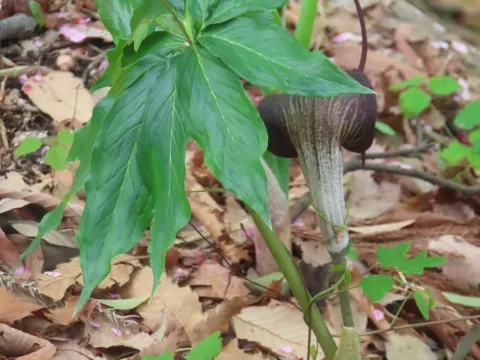
Arisaema urashima
Arisaema urashima
Planting of Arisaema urashima is typically performed in late spring once the threat of frost has completely passed. The soil should be well-warmed to encourage immediate root establishment after the dormancy period.
What the section contains
Arisaema urashima
When propagating via seeds, sow them in autumn or early spring in a seedbed with a fine-textured substrate. Patience is required, as germination can sometimes be erratic and take several months to complete.
For tuber planting, ensure the depth is approximately 10–15 cm deep. Proper spacing of 25–30 cm between plants is essential to prevent overcrowding and ensure adequate airflow around the emerging shoots.
The planting site must offer excellent soil drainage. Arisaema urashima thrives in organic-rich, loamy soils that hold moisture but allow excess water to escape efficiently, preventing stagnant water conditions.
Choose a location in the garden that provides partial to full shade. These plants are adapted to forest-floor environments where the canopy filters the light, protecting them from harsh afternoon sun exposure.
Arisaema urashima belongs to the Araceae family and originates from East Asia, particularly Japan. It is recognized for its unique spathe and a long, whip-like appendage that creates a striking visual display.
The plant requires consistent moisture throughout the growing season. While it loves damp conditions, it is sensitive to waterlogging, which can cause the tuber to rot during the peak of the summer heat.
Regarding winter hardiness, this species needs protection in colder climates. Applying a thick mulch layer of organic matter provides the necessary insulation to protect the dormant tubers from freezing soil temperatures.
Fertilization should be handled with care. A balanced, slow-release organic fertilizer applied early in the spring supports healthy foliage and the development of the distinct, snake-like flowering structure.
High humidity is essential for optimal growth. If the garden environment is dry, surrounding the plants with other moisture-loving species can help create a microclimate that benefits the Arisaema's development.
Root and tuber rot, caused by various fungal pathogens, remain the most significant threat to this culture. Ensuring excellent soil aeration and drainage is the primary defense against these diseases.
Slugs and snails are the most prevalent pests. They are attracted to the succulent foliage and can cause significant aesthetic damage. Use iron phosphate bait or physical barriers to mitigate their impact.
Aphids may occasionally infest the plant during the early growth stages. Frequent monitoring and the application of insecticidal soaps or horticultural oils can help manage these populations effectively.
Viral infections can lead to leaf deformities or mottled coloring. Since these are untreatable, removing and destroying affected plants is necessary to keep the rest of the collection safe from spread.
Mechanical damage to the tuber during division can invite infections. Always handle the bulbs with care and allow any accidental cuts to callous over in a dry, shaded area before replanting.