
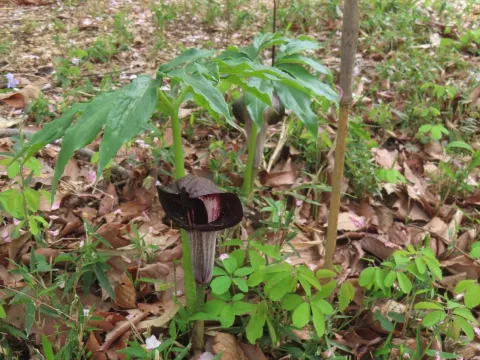
Arisaema thunbergii
Arisaema thunbergii
The planting of Arisaema thunbergii tubers is best performed in early spring as the soil warms up. Tubers should be buried at a depth of approximately 10–15 cm in well-drained, porous soil.
What the section contains
Arisaema thunbergii
For those starting from seed, a cold stratification period is essential to break dormancy. Seeds can be sown in autumn and kept in a cool greenhouse or outdoors during winter months.
When selecting a site, it is crucial to ensure the soil structure allows for rapid drainage, as Arisaema species are prone to rot if left sitting in saturated water.
Spacings of 30 cm between plants are recommended to facilitate proper air movement, which helps in preventing the development of humidity-related pathogens in the foliage.
Propagation through offsets is the most reliable method for home gardeners; offsets should be separated during the plant's dormant phase in early spring.
Arisaema thunbergii belongs to the Araceae family and is recognized for its striking hooded inflorescence, which is a classic feature of the genus.
The plant originates from the temperate forests of East Asia, requiring partial shade and cool, moist conditions to thrive throughout its vegetative cycle.
Optimal soil for this culture is rich in organic matter, such as leaf mold or compost, which mirrors the forest floor environment where these plants naturally occur.
Regular irrigation is vital during the growing season. The plant should never be allowed to dry out completely, but the medium must maintain a balance between moisture and oxygen availability.
In colder climates, applying a thick layer of mulch in late autumn is necessary to protect the underground tubers from severe freezing temperatures during the winter.
Root rot is the most significant threat to the health of Arisaema thunbergii, typically triggered by poor drainage and excessive moisture during the dormant period.
Slugs and snails present a persistent challenge, especially during the spring when the plant produces tender, succulent new shoots that are highly attractive to these pests.
Fungal leaf spots can occur if the foliage remains wet for extended periods, necessitating the use of improved air circulation and targeted fungicide applications if an outbreak begins.
Aphids occasionally infest the undersides of the leaves, drawing sap and weakening the plant, which may require manual removal or the application of insecticidal soaps.
Maintaining a clean garden environment and preventing debris from accumulating around the base of the plant can significantly reduce the risk of infestation and disease transmission.