
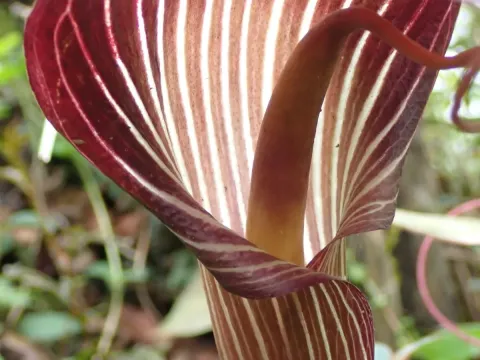
Arisaema speciosum
Arisaema speciosum
Seeds of Arisaema speciosum require a period of cold stratification to germinate effectively. Sowing is usually performed in late autumn, allowing the seeds to experience winter temperatures in a cold frame or open ground.
What the section contains
Arisaema speciosum
For indoor propagation, seeds should be sown in a sterile, well-draining potting mix at a depth of approximately 1 cm. Maintaining constant humidity is essential for the slow development of the embryonic plants.
Tubers are the most common form of propagation for home gardeners. They should be planted in the spring once the soil temperature is consistently above 10 degrees Celsius, placing them 10-15 cm deep.
When separating daughter tubers from the parent plant, it is vital to perform this task during dormancy. This ensures that the plant does not suffer from transplantation shock and can establish roots before the new growth phase begins.
Proper spacing is required to allow for adequate airflow between plants, which is a key factor in preventing fungal issues. Grouping 3-5 tubers together creates a naturalized effect in woodland settings.
Arisaema speciosum belongs to the Araceae family and is native to the Himalayas. It thrives in environments that replicate moist, forested mountain slopes with rich, loamy soil high in organic matter.
The soil must have a slightly acidic to neutral pH and excellent drainage. If the garden soil is heavy or prone to waterlogging, it should be amended with perlite, grit, or leaf mold to improve structural porosity.
Shade is mandatory for this species. It performs best in partial to full shade, especially during the hottest part of the day, as direct sunlight causes leaf scorch and forces premature dormancy.
Consistent moisture is key during the growing season. The plant should never be allowed to dry out completely, nor should it sit in stagnant water, which invites tuber rot and systemic bacterial infections.
In colder zones, the tubers should be protected from extreme frost by applying a thick layer of mulch or bringing container-grown specimens into an unheated garage or shed where the soil stays cool but frost-free.
Tuber rot caused by excess water is the primary cause of failure. Implementing a high-quality drainage layer at the bottom of the planting hole is the most effective preventative measure against soil-borne pathogens.
Slugs and snails find the succulent shoots of Arisaema speciosum particularly appealing. Regular monitoring and the application of organic barrier methods are recommended throughout the early spring.
Aphids can colonize the spathe or the undersides of the leaflets. Simple mechanical removal or a gentle spray with a diluted neem oil solution usually keeps the infestation under control without harming the plant.
Viral infections, often spread by sap-sucking insects, present as yellow mottling on the leaves. There is no cure for these viruses, so rogueing affected plants is necessary to protect the rest of the collection.
In humid conditions, fungal leaf spots may occasionally develop. Removing damaged foliage at the end of the season and improving air circulation around the plants will minimize the risk of recurring infection.