
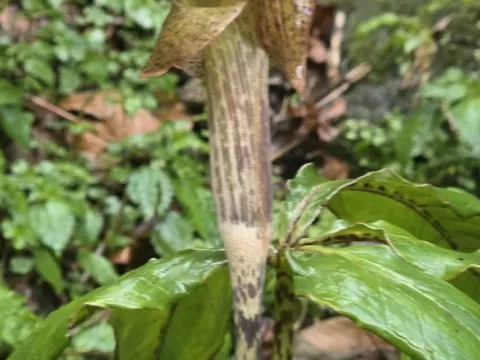
Arisaema nepenthoides
Arisaema nepenthoides
Arisaema nepenthoides is typically propagated via seeds or by division of tubers during their dormant period. Seeds should be sown as soon as they ripen into a well-draining, humus-rich substrate, often requiring a period of cold stratification to break dormancy.
What the section contains
Arisaema nepenthoides
Division of the tubers is best performed in early spring, just before the first signs of growth. It is essential to treat any cuts or wounds on the tubers with powdered charcoal to prevent fungal infections and bacterial soft rot.
Tubers are planted at a depth of 10–15 centimeters, depending on the size of the bulb, ensuring that the soil remains loose and aerated. Planting in a sheltered spot that mimics a woodland floor is crucial for successful establishment.
The choice of site should focus on protecting the plant from intense, direct sunlight, which can scorch the foliage. In regions with harsh winters, providing a thick layer of organic mulch is necessary to protect the tubers from freezing temperatures.
Fertilization with well-decomposed organic matter or compost helps fuel rapid development during the growing season. Avoiding synthetic high-nitrogen fertilizers is recommended to prevent excessive succulent growth that may be prone to disease.
The culture thrives in cool, moist, and shady conditions, mirroring its natural habitat in the Himalayan mountain regions. Maintaining consistent soil moisture is vital, yet standing water must be avoided to prevent rot.
Ideal soil for Arisaema nepenthoides should be porous, rich in organic matter, and slightly acidic. The presence of leaf litter in the soil mix is highly beneficial as it provides the necessary nutrients and structure for the tuberous roots.
Temperature management is key; the plant prefers a cool, temperate environment with temperatures between 15°C and 22°C. In hotter climates, artificial shade and high humidity are necessary to prevent the plant from going into premature dormancy.
The plant requires good airflow in its growing environment to prevent the buildup of stagnant, humid air, which can promote leaf diseases. However, protection from strong, drying winds is also essential for maintaining leaf health.
Consistent, long-term site planning is recommended as the plant does not respond well to frequent disturbances of the root system. Once established in a suitable micro-climate, it will reliably produce its unique inflorescences annually.
Root rot is the most common threat, usually caused by overwatering or poor soil drainage. If the soil becomes waterlogged, the tubers can deteriorate rapidly, often making recovery impossible for the affected plant.
Slugs and snails are the primary pests that damage the broad, attractive leaves of the Arisaema. Implementing physical barriers, such as copper tape or gravel around the base, is effective in protecting the emerging shoots.
Spider mites may occasionally infest the plant during spells of dry, warm weather, causing yellowing and stippling of the foliage. Maintaining high ambient humidity is an effective natural way to deter mite populations.
Bacterial soft rot can occur if tubers are planted in heavy, clay-rich soils that do not allow for adequate gas exchange. This disease typically manifests as a foul-smelling collapse of the stem base.
Proactive care, including the regular removal of weeds and the use of clean, pathogen-free planting stock, significantly reduces the risks to this crop. Annual maintenance of mulch layers also helps suppress soil-borne pathogens.