
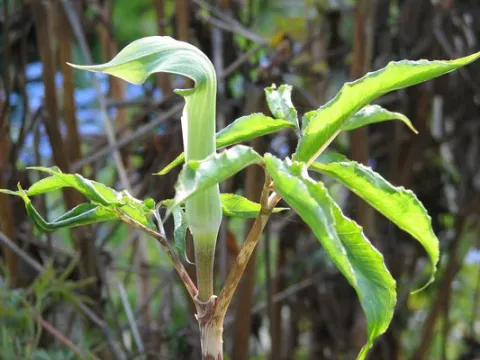
Arisaema negishii
Arisaema negishii
Arisaema negishii is a unique perennial herb belonging to the Araceae family. This species is native to Japan, specifically found in forest environments where it thrives in rich, moist, and well-drained soil typical of deciduous woodland habitats.
What the section contains
Arisaema negishii
The botanical structure of the plant is centered on a subterranean tuber that stores energy for its annual growth cycle. It features a sophisticated inflorescence consisting of a spadix and a spathe, which serves as a highly efficient trap for pollinators during the flowering phase.
Successful cultivation requires a site with filtered shade or deep canopy coverage, as direct sunlight is detrimental to the foliage. The plant performs best in a loose, humus-rich medium that allows for optimal drainage while retaining sufficient moisture for the root system.
Regarding climate requirements, this species prefers mild temperatures and high humidity. It is sensitive to extreme heat, which can trigger early dormancy, and requires winter protection in regions where the ground freezes deeply, often involving mulching or lifting the tubers.
In terms of agricultural management, regular but moderate watering during the active growing season is essential. Over-saturation is the leading cause of failure, so supplemental irrigation should only be provided when the top layer of the substrate begins to dry out.
The most significant threat to the health of Arisaema negishii is root rot caused by Erwinia or fungal pathogens during periods of excessive soil dampness and poor oxygen exchange in the growing medium.
Slugs and snails are the most prominent pests, often causing extensive damage to the emerging foliage in the spring. Gardeners should implement manual removal or utilize organic barriers to protect the developing sprouts.
Aphids can occasionally infest the spathe or the undersides of the leaves, which not only stunts growth but can potentially transmit viral diseases that lead to mottled or stunted foliage.
Severe infestations require systemic insecticides, though cultural controls, such as maintaining garden hygiene and reducing excessive mulch around the crown, are generally preferred for this delicate species.
Proactive management involves ensuring the tubers are planted with a layer of grit underneath to facilitate drainage and prevent the water accumulation that leads to rot.