
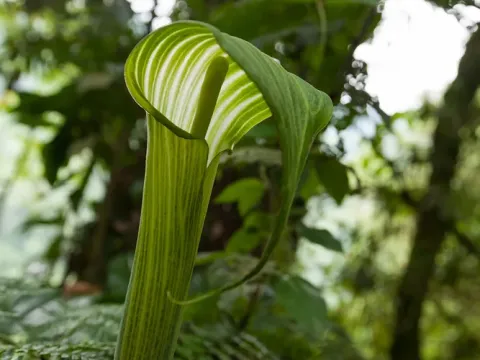
Arisaema mildbraedii
Arisaema mildbraedii
Arisaema mildbraedii is a fascinating perennial species belonging to the Araceae family. Native to the high-altitude forests of East Africa, this plant is well-adapted to cool, humid environments characterized by frequent mist and stable temperatures.
What the section contains
Arisaema mildbraedii
Cultivation of this species requires a light, porous, and humus-rich growing medium. It is essential to ensure that the soil has excellent drainage capacity to prevent the waterlogging of the tuber, which is critical for the long-term survival of the plant.
The ideal location for this crop is a spot with dappled shade. Direct intense sunlight should be avoided as it can scorch the foliage and cause the plant to lose its typical lush appearance, which is its primary horticultural asset.
In terms of climate, Arisaema mildbraedii thrives in temperate conditions with high atmospheric humidity. Gardeners must protect the plant from extreme heat and ensure that the root zone remains consistently moist but never waterlogged during the active growing phase.
The primary use for Arisaema mildbraedii is ornamental cultivation. It is highly valued by plant enthusiasts for its distinct spathe and spadix, making it a sought-after specimen for specialized conservatories and shaded forest gardens.
Fungal infections and root rot remain the primary threats to the health of the plant. These issues are almost exclusively associated with improper watering practices and poor substrate drainage that prevents adequate oxygenation of the roots.
Slugs and snails are the most common pests, as they are attracted to the tender, succulent tissues of the plant. Using physical barriers or copper tape around planting sites can significantly reduce the impact of these common garden pests.
Aphid infestations may occur on the developing flower stalks. Integrated pest management strategies, such as using horticultural soaps or introducing natural predators, are recommended to control these insects without damaging the plant's delicate tissues.
Storage of the tubers during the dormant period requires careful management. If the environment is too dry, the tuber will desiccate, while too much humidity will lead to rot. A cool, dark, and well-ventilated space is essential for winter storage.
Viral mosaic diseases can occasionally affect the foliage, resulting in stunted growth. Since there is no effective cure for viral infections in ornamental tubers, infected specimens should be discarded immediately to protect the rest of the collection.