
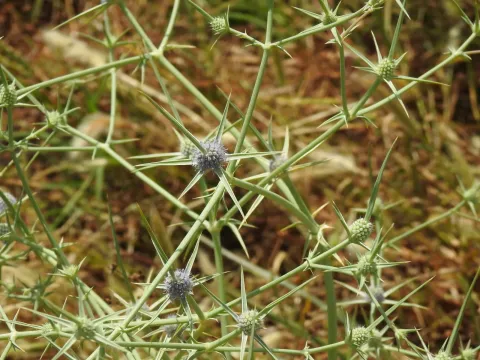
Corniculate eryngo
Eryngium corniculatum
Sowing seeds of Eryngium corniculatum is best done in late autumn, as the seeds require mandatory stratification for successful germination. Sowing in open ground is carried out in prepared furrows to a depth of no more than 1–2 centimeters.
What the section contains
Corniculate eryngo
When sowing in spring, the seeds require artificial stratification for 30–45 days at low temperatures. Sowing is carried out in containers or nursery boxes, which are kept in a cool room until the seedlings emerge.
After the appearance of the first two true leaves, the seedlings are pricked out into a permanent location or individual containers for further development. The plant is characterized by slow growth in the first year of life, so it is important to keep the plantings free of weeds.
The optimal planting pattern is 40 by 40 centimeters to ensure sufficient nutrient area. The planting density depends on the purpose of cultivation; closer spacing is acceptable for decorative purposes.
Propagation is also possible vegetatively, but due to the taproot system, the plant does not tolerate transplanting well. Division of the bush should be performed very carefully, trying to maintain the integrity of the soil ball.
Corniculate eryngo belongs to the Apiaceae family and is a typical xerophyte adapted to dry growing conditions. The crop prefers open, well-lit sunny areas, as in the shade the stems lose their strength and decorative appeal.
The plant is undemanding to soil, but grows best in light, well-drained, sandy, or stony soils. Heavy clay soils with stagnant moisture are detrimental to the root system, causing it to rot during the winter period.
The crop has high drought resistance, which makes it promising for cultivation in regions with insufficient moisture. Watering is required only during the active growth period at a young age or under conditions of an extremely dry summer.
The plant tolerates poor soils well, but applying small doses of mineral fertilizers at the beginning of the growing season allows for more powerful inflorescences. Organic fertilizers should be used with caution, avoiding excess nitrogen.
The native range of the species covers territories of Southwestern Europe, including regions with a temperate and Mediterranean climate. The plant is adapted to sharp temperature fluctuations and can overwinter without shelter in most climatic zones.
The economic use of Eryngium corniculatum is focused on obtaining medicinal raw materials and decorative inflorescences. The yield of green mass and seeds directly depends on the fertility of the soil and the level of lighting of the plot.
In phytotherapy and pharmaceuticals, the roots and aerial parts of the plant are valued for their expectorant and anti-inflammatory properties. Harvesting of medicinal raw materials is carried out in the full flowering phase, ensuring the highest quality drying in the shade.
Decorative use of the crop involves collecting dried flowers that retain their shape and color for a long time. For high-quality dried flowers, fully opened but not wilted inflorescences are cut.
The seed yield potential ranges from 15 to 30 grams per mature bush. In commercial cultivation, it is important to observe the timing of harvesting, as the seeds are prone to shattering when overripe.
Using the plant as a honey source ensures a stable flow of pollinators to the site, which indirectly contributes to increasing the productivity of neighboring entomophilous crops.
The main threats to Eryngium are associated with disruption of soil aeration and excessive moisture. Root rot, which develops during water stagnation, is the most dangerous, leading to the death of the plant during the cold season.
In conditions of high air humidity, powdery mildew may develop on the leaves. To prevent this disease, it is necessary to ensure good air circulation between plants and avoid crowding the plantings.
Among pests, the greatest damage can be caused by aphids and various types of weevils that damage the buds. Monitoring of pest populations is carried out during the budding phase and the beginning of flowering.
If outbreaks of infection or insect infestations are detected, appropriate fungicides and insecticides are used in permitted dosages. Biological control methods, such as attracting entomophages, are the most preferred.
- Adherence to crop rotation.
- Ensuring quality drainage.
- Regular removal of weeds.
- Monitoring soil moisture levels.