


Reference · Crops
Coriander
Coriandrum L.
Coriander is a cold-tolerant crop, so sowing is performed in early spring as soon as the soil warms up to 5–6°C. The optimal timing is during the physical maturity of the soil, allowing seeds to utilize stored moisture from winter.
1
items
What the section contains
Marketplace
Products in this section · 12




Coriander
To ensure uniform emergence, it is crucial to maintain a sowing depth of 2 to 4 centimeters depending on soil texture. Planting too deep can delay sprouting or cause seed decay due to lack of energy.
For fresh herb production, growers use a staggered sowing strategy with 10–14 day intervals. This ensures a consistent supply of fresh cilantro to the market throughout the growing season.
The seeding rate varies significantly depending on whether the target is seed yield or fresh greens. Industrial production of essential oil crops usually involves row or narrow-row planting methods.
Winter sowing of coriander is possible in regions with mild climates to achieve an early harvest. However, one must account for the risk of frost damage to young seedlings during sudden temperature drops.
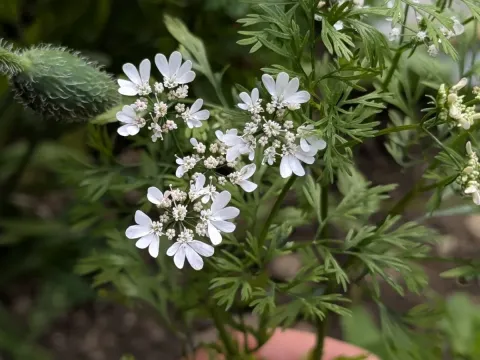
Coriander is an annual herbaceous plant of the Apiaceae family, highly valued for its essential oil content. The crop requires significant light, as shading during the flowering phase can drastically reduce oil accumulation in the fruits.
The plant thrives on fertile black soils, chestnut soils, and loams with a neutral or slightly alkaline pH. Heavy, waterlogged, or crusting soils are unsuitable due to the high risk of root rot and poor development.
Moisture requirements are highest during the germination and stem-growth phases. In the latter half of the season, during fruit maturation, coriander prefers moderate moisture and dry, sunny weather for superior oil quality.
Coriander is sensitive to temperature regimes, with an optimal growth range of 18–22°C. While young seedlings can survive short frosts down to -5°C, sustained cold can negatively affect the overall plant health.
In crop rotation, coriander should be placed after winter cereals or legumes. It is strictly recommended to avoid monocropping or short rotations to prevent the buildup of specific soil-borne pathogens.
Average seed yields for coriander typically range from 1.0 to 2.0 metric tons per hectare. With advanced agronomic practices and favorable weather conditions, yields can significantly exceed these averages.
Fresh herb yield depends heavily on the variety and irrigation intensity. On specialized herb farms with irrigation, it is possible to harvest between 15 and 20 tons of high-quality produce per hectare.
Final productivity is influenced by plant density, ideally maintained between 500,000 and 800,000 plants per hectare. Lower density encourages branching but may reduce total biomass per unit area.
Essential oil content, the primary quality metric, is highly dependent on maturation conditions. Peak concentrations are achieved during sunny weather during the waxy maturity phase of the seeds.
Fertilizer application plays a vital role in yield, particularly phosphorus and potassium, which improve stem strength and lodging resistance while supporting reproductive development.
Ramularia blight is the most serious fungal disease affecting coriander, targeting all aerial plant parts. Under severe infection, crops can be completely destroyed before the flowering phase begins.
Powdery mildew frequently occurs in the late summer during periods of high temperature fluctuation. It covers leaves in a white mycelium, inhibiting photosynthesis and leading to shriveled seeds.
The coriander seed wasp is the most damaging pest, laying eggs directly into the developing fruits. Larvae consume the inner kernel, rendering the seed completely useless for industrial processing.
Umbellifer moths and tarnished plant bugs also cause significant damage by feeding on young flower buds and tender shoots. Regular scouting is essential for timely intervention.
Effective prevention of diseases and pests requires spatial isolation of fields and rigorous seed treatment with appropriate fungicides and insecticides before sowing.
Harvesting for seeds should be conducted when 60–80% of the fruits have turned brown. It is crucial to avoid over-ripening, as coriander seeds are prone to shattering upon mechanical impact or wind.
The most efficient harvest method is swathing, which involves cutting the crop into windrows followed by drying and threshing. This strategy minimizes harvest losses due to shattering.
Direct combining is only possible with uniform crop maturation and the use of specialized headers. This method requires strict control over seed moisture content to prevent mechanical damage.
After threshing, seeds must be cleaned and dried to a moisture content of 12–13%. This is the only way to ensure long-term storage without compromising essential oil quality.
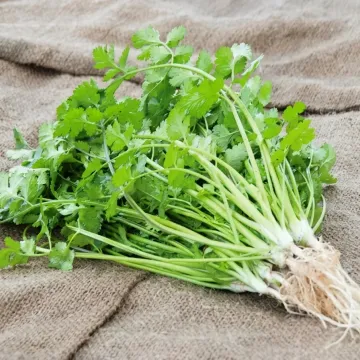
Fresh herbs are harvested manually or mechanically before the bolting phase when the leaves are most tender and fragrant. Fresh produce must be cooled immediately after harvest to preserve market quality.