
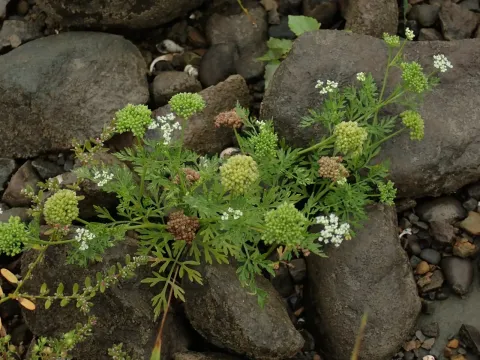
Cnidium
Cnidium Cusson
Sowing Cnidium seeds is best performed in the autumn or early spring after the seeds have undergone a necessary stratification process. To ensure uniform germination, the soil moisture must be consistently maintained, with temperatures between 10 and 15 degrees Celsius.
What the section contains

Cnidium
Seeds should be planted at a shallow depth of approximately 1.5 to 2 centimeters to facilitate easy emergence. Row spacing should be set at 40 to 50 centimeters to provide adequate space for the root system to expand fully.
It is essential to use high-quality, viable seeds, as the crop has a specific dormancy period. Precision seeding equipment is recommended in commercial operations to achieve optimal plant density and uniformity.
Once seedlings have emerged, thinning is required to maintain an interval of 20 to 25 centimeters between individual plants. This practice is vital for reducing crowding, which helps prevent the spread of fungal diseases.
Proper timing of the sowing stage allows the crop to establish a strong root system before the onset of summer heat, which is crucial for achieving high-quality yields in the later stages of growth.
As a member of the Apiaceae family, Cnidium requires fertile, well-drained loamy soils for optimal development. A neutral to slightly acidic soil pH is ideal for the successful cultivation of this crop.
The plant thrives in full sunlight, necessitating the selection of open, well-lit fields for production. It is highly sensitive to waterlogging, as stagnant water in the soil can quickly lead to root rot and significant crop loss.
The ideal climate for Cnidium is a temperate environment with sufficient rainfall during the spring and summer. In regions with dry spells, supplemental irrigation is necessary to maintain proper metabolic rates and root mass.
Field preparation involves deep plowing and the incorporation of organic matter to build soil fertility. Proper preparation ensures that the soil structure supports the deep-reaching roots typical of this species.
Crop rotation is mandatory to prevent the buildup of soil-borne pathogens and pests common to Apiaceae plants, ensuring the long-term sustainability of the production site.
The yield of Cnidium depends heavily on the age of the plant, as the concentration of active compounds peaks during the second and third years of growth. Maximizing the biomass of the root is the primary goal of the farming process.
Consistent use of balanced mineral fertilizers, particularly those rich in phosphorus and potassium, significantly enhances root development. This directly translates into a higher total weight of harvested raw material.
During the growing season, it is important to monitor the canopy development. Excessive foliage growth at the expense of root expansion should be managed to ensure that energy is diverted into the desired part of the plant.
Effective weed control is a critical component of increasing yield. Competition for nutrients and water must be minimized through mechanical weeding to keep the plants growing vigorously until the harvest date.
Finally, the overall yield is measured after the washing and drying processes. Proper post-harvest management ensures that the initial mass of the harvested roots is preserved as high-quality commercial product.
The primary threats to Cnidium crops include specific pests such as the parsnip webworm and aphids, which can damage foliage and flowers, subsequently weakening the entire plant's health.
Fungal diseases like powdery mildew and gray mold pose a constant risk, especially in conditions of high humidity or poor field ventilation. Early detection is essential for maintaining crop health.
Integrated pest management (IPM) strategies, including the use of targeted fungicides and environmental control, are recommended. It is vital to adhere to strict safety regulations when applying chemical controls to medicinal crops.
Weeds are particularly dangerous during the establishment phase. Using mechanical cultivation between rows provides an effective way to keep the crop environment clean without harming the main plants.
Routine scouting of the field is necessary to identify and treat potential issues before they become widespread. Regular monitoring programs are key to successful large-scale Cnidium production.
The harvest of Cnidium roots is conducted in the autumn, when the aerial parts of the plant begin to yellow and wither. This indicates that the plant's resources have been fully translocated into the roots.
Mechanical harvesting is carried out using specialized root-digging equipment. The machinery must be adjusted to the correct depth to prevent mechanical injury or slicing of the valuable root material.
Immediate cleaning and washing of the roots are necessary after harvesting to remove soil and prevent premature fermentation. The roots must be processed quickly to avoid quality degradation.
Drying must be performed in well-ventilated drying facilities at a controlled temperature between 40 and 50 degrees Celsius. This preserves the thermo-sensitive bioactive compounds within the root.
Once dried to the appropriate moisture content, the product is sorted and packaged. Proper storage in a dry, cool environment is critical to maintain the shelf life and medicinal potency of the final product.