
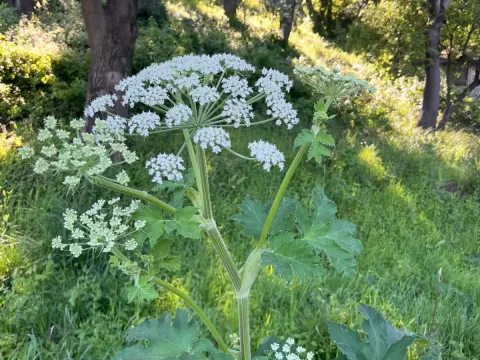
Cow parsnip
Heracleum maximum
Heracleum maximum, commonly known as cow parsnip, is a robust herbaceous perennial belonging to the Apiaceae family. Unlike its invasive counterparts, this species is native to North America and serves as a valuable forage and traditional food source.
What the section contains
Cow parsnip
Sowing should ideally occur in late autumn to allow for natural cold stratification, which significantly improves germination rates in the spring. Spring sowing requires pre-chilled seeds to ensure successful emergence.
Seeds should be sown at a shallow depth of 1-2 centimeters. Due to their small size, they require firm contact with the soil, which is best achieved by light rolling after the sowing process.
Row spacing should be maintained between 60 to 70 centimeters to accommodate the significant height and spread of the mature plant. This distance ensures adequate aeration and prevents fungal growth.
Consistent moisture is critical during the initial germination phase. The soil should be kept damp until the seedlings have established a firm root system, usually within the first few weeks.
Cow parsnip thrives in cool, moist climates with plenty of rainfall. It is highly winter-hardy, making it a reliable crop for northern agricultural zones where other forage plants might fail.
The plant requires deep, fertile, and well-drained loamy soils. While it prefers moist conditions, it cannot tolerate waterlogged ground, which can cause root rot and stunt growth.
A neutral to slightly acidic pH level is optimal for nutrient uptake. Incorporating compost or well-rotted manure into the soil prior to planting provides the necessary nitrogen for vigorous leaf development.
While the crop is shade-tolerant, maximum biomass production is achieved in full sun or light dappled shade. Exposure to intense heat and drought should be avoided to prevent early lignification.
Field maintenance involves keeping the rows clear of competitive weeds during the first year. Once established, the large foliage of Heracleum maximum effectively shades out competing vegetation.
The primary agricultural use of cow parsnip is as a nutritional forage crop. Its leaves and succulent stems are rich in vitamins, minerals, and proteins, making them an excellent additive to cattle feed.
Yields can reach 30 to 40 metric tons per hectare under optimal conditions. The plant's high palatability makes it an attractive option for livestock producers looking for alternative green feed.
Beyond forage, the plant has historical significance in traditional medicine, with roots used for their anti-inflammatory properties. This secondary utility provides potential for diversification in small-scale farming.
The deep, fleshy taproots of the plant also improve soil structure and facilitate nutrient cycling, making it a beneficial component of sustainable crop rotation systems.
Careful planning is required to balance yield with seed production if the farm intends to sustain its own seed supply, as flowering directs energy away from vegetative mass.
Powdery mildew and various leaf spot fungi represent the most significant threats during humid summers. Improving air circulation by maintaining proper row spacing is the best preventative strategy.
Pests such as the parsnip webworm and various aphids can infest the flower umbels. These infestations are particularly problematic when the goal is seed production rather than green forage.
Wireworms can be detrimental to young seedlings by feeding on the taproot. Cultural control methods, including regular soil cultivation and proper crop rotation, are recommended to mitigate damage.
Regular field scouting is essential to identify early signs of pathogens. Immediate removal of affected tissues can prevent the spread of disease across the field.
Avoid heavy use of chemical pesticides to preserve the quality of the green mass intended for animal consumption, opting instead for integrated pest management practices.
Forage harvesting should be timed with the peak of the budding phase but before the stems become overly fibrous. This ensures the best balance of nutrient density and digestibility for livestock.
The cutting height should be at least 10-15 centimeters above the crown to prevent damaging the growing points, ensuring the plant can successfully regenerate in subsequent seasons.
The cut biomass should be chopped and ensiled quickly. Proper packing in the silo is essential to create the anaerobic environment required for high-quality fermentation and storage.
Seed harvesting should be performed when the umbels turn a light brown color. The seeds should be gathered immediately to prevent shattering and then stored in a cool, dry place to maintain viability.
After the final seasonal harvest, it is recommended to clear debris to prevent overwintering of fungal spores, ensuring a healthy start for the following spring growth cycle.