
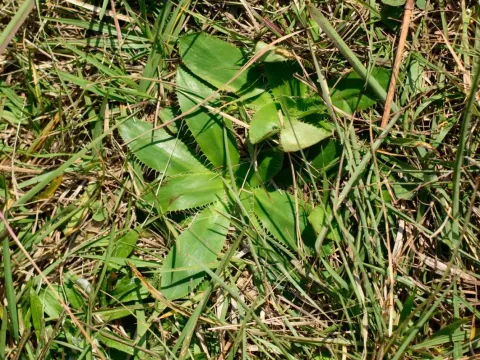
Ciliated eryngo
Eryngium ciliatum
Sowing Ciliated eryngo is recommended in late autumn directly into open ground, which allows for natural stratification of the seeds. For spring sowing, seeds must undergo cold stratification in a refrigerator for at least one month, as germination rates drop significantly without this chilling period.
What the section contains
Ciliated eryngo
Seeds should be sown in prepared furrows at a depth of no more than 0.5–1 cm, maintaining a spacing of about 30–40 cm between rows. After sowing, the soil surface should be lightly compressed to ensure good seed-to-soil contact and kept moderately moist.
Seedling emergence is often uneven, so maintaining consistent soil moisture throughout the spring is crucial. Young plants develop slowly, focusing energy on building a sturdy rosette of basal leaves during the first year of growth.
If starting seeds indoors, use individual pots in March. This species is sensitive to disturbance of its taproot, so any transplanting to a permanent location must be done with extreme care using a gentle shifting technique.
The optimal germination temperature is between +18 and +20 degrees Celsius. Proper lighting is essential during the seedling stage to prevent the plants from becoming leggy and weak.
Ciliated eryngo belongs to the Apiaceae family and is highly valued for its drought tolerance and low-maintenance nature. Originating from rocky and arid habitats, it prefers well-drained, light soils with a neutral to slightly alkaline pH.
This crop is strictly photophilous and must be placed in full sun. Shade leads to a loss of ornamental appeal, weaker stems, and a reduction in the vibrant coloration of the bracts that make the plant so attractive.
Irrigation should be moderate; waterlogging in the root zone is fatal as it frequently triggers root rot. Once established, the plants are capable of surviving long periods of drought without losing turgor or wilting significantly.
For successful cultivation, avoid over-fertilizing with nitrogen, which promotes excessive leafy growth at the expense of floral development. Applying a balanced mineral fertilizer once in early spring is generally sufficient for the whole season.
The plant is well-adapted to temperate climate conditions and shows excellent cold hardiness during winter. Extra winter protection is only necessary in regions with extremely low temperatures and a lack of consistent snow cover.
The economic value of Ciliated eryngo lies in its use as an ornamental crop for floral compositions and as a high-quality dried flower. With proper cultivation techniques, you can harvest 15–20 flower stems per plant annually.
For medicinal purposes, both the roots and the aerial parts of the plant are utilized. It is recommended to harvest the rhizomes starting from the third year of the plant's life, when the concentration of bioactive compounds is at its peak.
Yield depends on planting density: the optimal spacing is 4–6 plants per square meter. At this density, the total biomass of harvested material per unit area reaches volumes suitable for small-scale commercial farming.
The essential oil content of the plant makes it a promising crop for specialized herb farms. Regularly cutting back faded inflorescences can stimulate a second flush of blooms in late summer, indirectly increasing the total productivity of the crop.
Soil preparation is a critical factor: on fertile yet porous substrates, the plant develops a more robust root system, which directly correlates to the volume of root material that can be harvested.
Ciliated eryngo is highly resistant to most diseases, but poor growing conditions can lead to fungal infections. Powdery mildew is the most common issue, usually resulting from poor air circulation and excessive ambient humidity.
Root rot is the most dangerous threat, typically caused by waterlogged soil or lack of proper drainage. Prevention involves strict adherence to irrigation schedules and the application of fungicides at the first sign of foliage discoloration.
Pests such as aphids can occasionally attack young inflorescences and apical shoots. Systemic insecticides or biological controls are effective methods for managing these populations without harming the plant's structural integrity.
Slugs and snails may damage the young leaf rosettes during rainy weather by nibbling on the edges of the foliage. Barriers or granulated baits placed around the perimeter of the planting beds serve as effective protection.
The overall resilience of the crop allows for minimal chemical intervention, making Ciliated eryngo an environmentally friendly choice for home gardens and small-scale farms alike.
Harvesting for dried flowers should be performed when the buds are fully open and the bracts display their most vivid colors. Cutting should be done in dry weather, ensuring stems are kept at the maximum length possible.
After harvesting, stems should be bundled and hung upside down in a well-ventilated area protected from direct sunlight. This method preserves the natural stiffness and prevents the vibrant colors from fading during the drying process.
Root harvesting is conducted in autumn after the growing season concludes and the aerial parts begin to wither. Roots should be carefully dug up, thoroughly cleaned of soil, and washed under running water.
Drying medicinal material should be handled in specialized drying cabinets at temperatures not exceeding +40...+45 degrees Celsius, which helps retain the essential oils and volatile components within the plant tissue.
Stored raw material must be kept in airtight containers or paper bags in a dry, dark place to prevent the loss of therapeutic properties and ensure the long-term preservation of the plant's aesthetic features.