
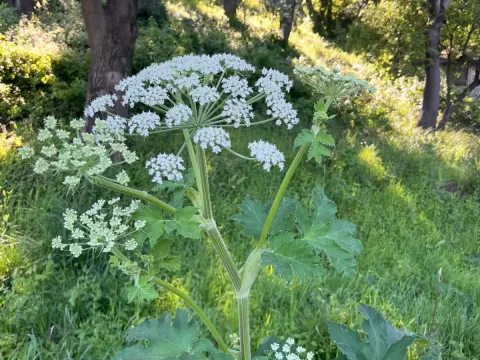
Cow parsnip
Heracleum lanatum
Heracleum lanatum, commonly known as cow parsnip, is a robust herbaceous perennial native to North America. In agricultural settings, it is best established through fall seeding to allow the seeds to undergo natural stratification during the winter months.
What the section contains
Cow parsnip
If spring seeding is planned, seeds must be cold-stratified for at least 60 days to break dormancy. Sowing depth should be approximately 2 centimeters to ensure adequate moisture contact while allowing for emergence.
Row spacing is typically set at 75 centimeters to permit mechanical weeding and ensure that the large leaves have sufficient space for photosynthesis. This spacing also encourages better air circulation throughout the plantation.
During the first year, the plant focuses on developing a deep taproot and a large basal rosette of leaves. Rapid stem elongation and flower production generally occur from the second year onwards.
High-quality seeds should be used, as the germination rate can be sensitive to age and storage conditions. Sowing should be completed before the soil temperature drops significantly in late autumn.
Cow parsnip thrives in deep, fertile, well-draining soils with a neutral pH. It is particularly well-suited to loamy soils that can retain moisture while allowing excess water to drain away.
The plant performs best in locations with partial to full sun. While it can tolerate some shade, maximum biomass production is achieved when the crop receives at least six hours of direct sunlight daily.
It is highly winter-hardy and adapted to cool climates, making it an excellent candidate for regions with harsh winter conditions. It exhibits strong growth during the mild temperatures of spring and early summer.
Soil fertility is critical for high yields; thus, annual applications of organic manure or balanced NPK fertilizers are recommended. Nitrogen is especially important early in the growing season to promote vegetative growth.
Consistent soil moisture is vital during the stem elongation phase. While the plant has a deep root system, prolonged droughts can significantly reduce the overall yield and nutrient quality of the forage.
When managed properly, cow parsnip can produce substantial amounts of forage. Yields are typically measured in terms of dry matter, with multiple cuttings possible throughout the growing season in fertile regions.
The forage is highly palatable to livestock, particularly when harvested at the early budding stage. It is rich in minerals and vitamins, providing a high-quality nutritional supplement for ruminants.
A well-maintained stand can remain productive for several years, often lasting up to 8 years before replanting is necessary. This long-term productivity makes it an efficient land-use option.
Seed production is also significant, allowing farmers to maintain a closed loop for their planting stock. Yields of seeds can reach several hundred kilograms per hectare under optimal conditions.
The total yield is heavily dependent on management, specifically the timing of the first cut and the availability of nitrogen fertilizer throughout the growth cycle.
Powdery mildew is the most common fungal disease affecting cow parsnip, particularly in seasons with high humidity and poor air circulation. Regular monitoring and thinning of the stand can help mitigate this risk.
Various insects, such as the parsnip webworm, may target the flower heads and developing seeds. Integrated pest management (IPM) strategies, including the use of beneficial insects, are encouraged to protect the crop.
Root rots can become an issue if the soil remains waterlogged for extended periods. Proper land grading and the installation of tile drainage can prevent these problems before they start.
Weed control is essential during the initial stages of establishment. Once the canopy closes, the broad leaves of the cow parsnip effectively shade out competing weeds, reducing the need for chemical intervention.
Slugs and snails can cause damage to the tender young leaves in the spring. Barrier methods or approved molluscicides can be employed if populations reach damaging levels.
Harvesting for forage should ideally occur just before or at the onset of flowering. This stage ensures the best balance between protein content and fiber digestibility.
Cutting should be performed at a height of 15 centimeters above the ground to ensure the crown of the plant is not damaged, allowing for healthy regrowth for subsequent cuts.
If the crop is being prepared for silage, it should be wilted in the field for a short period to reduce moisture content before being chopped and stored in a silo or bunker.
Seed harvesting should take place when the umbels are dry and turn a golden-brown color. Care must be taken to prevent shattering, as the seeds disperse easily when fully mature.
Post-harvest management involves clearing the field of debris and potentially applying a final light fertilization to support the plants as they prepare for dormancy.