
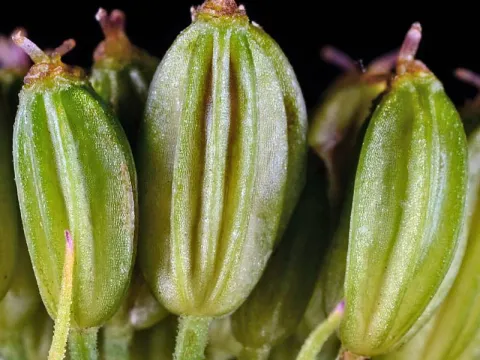
Conioselinum
Conioselinum
Conioselinum seeds are typically sown in late autumn or early spring, as they require a stratification period to ensure uniform germination.
What the section contains


Conioselinum
The seeds should be sown at a depth of approximately 1 to 2 centimeters to ensure adequate moisture contact while allowing for successful emergence.
In commercial cultivation, row seeding with spacing of about 45–60 centimeters is recommended to facilitate regular field maintenance and weed control.
Seedlings may emerge unevenly, so it is vital to maintain consistent moisture in the topsoil layer during the initial weeks of development.
Thinning the crops should occur when the plants reach the two-to-three leaf stage, leaving an interval of 20–30 centimeters between individual plants.
Conioselinum is a member of the Apiaceae family, preferring partially shaded or well-lit areas with consistent soil moisture levels.
The crop thrives best in fertile, loose, and humus-rich soils with a pH ranging from neutral to slightly acidic conditions.
The plant exhibits significant cold hardiness, which is characteristic of species native to the temperate and arctic regions of the Northern Hemisphere.
Stable access to moisture is essential for successful growth, as the plant does not tolerate prolonged drought or overheating of its root system.
In its natural habitat, it is found in woodlands, damp meadows, and near water bodies, necessitating a location with high water availability.
Yield levels of Conioselinum depend on planting density, soil fertility management, and timely irrigation during dry summer periods.
For root harvesting, which is common in pharmaceutical applications, the primary yield is usually obtained in the second or third year of the perennial growth.
Maximizing the concentration of bioactive compounds requires a balanced nutrient program, focusing on potassium and phosphorus during the budding phase.
High yields are achievable through proper soil preparation and by maintaining a weed-free environment during the early stages of plant development.
Commercial farming of Conioselinum requires ongoing monitoring of the plants' health to prevent losses caused by unfavorable climatic fluctuations.
Primary threats to Conioselinum include fungal diseases such as powdery mildew and various leaf spots, which thrive in conditions of high humidity.
Pests typical of the Apiaceae family, including aphids, bugs, and beetle larvae, can cause significant damage to the stems and foliage.
Root rot can occur due to waterlogging, highlighting the importance of selecting a well-drained site for optimal cultivation success.
Integrated pest management using biological agents is highly recommended, especially when growing the plant for medicinal use, which requires high purity.
Preventative measures involve standard crop rotation practices, regular weeding, and the removal of plant debris that might harbor pathogens.
The aerial parts of Conioselinum are harvested during the peak flowering phase, when the concentration of essential oils and active substances is at its highest.
Rhizomes are collected in late autumn after the growing season, when the plant is dormant and nutrients are stored in the underground storage organs.
Harvested material must be quickly cleaned of soil and dried in well-ventilated rooms, away from direct sunlight to preserve its quality.
Drying temperatures should be kept below 40–45 degrees Celsius to prevent the evaporation of volatile compounds that give the plant its medicinal value.
Properly dried Conioselinum raw material retains its therapeutic properties for up to two years when stored in sealed containers in a dry, dark place.