
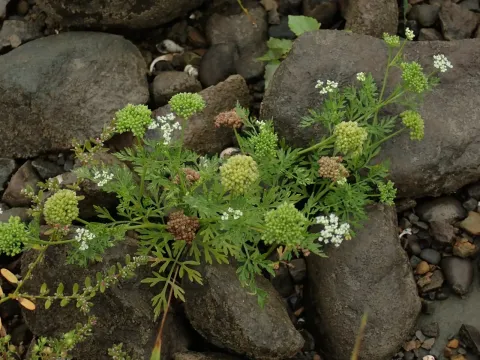
Cnidium
Cnidium
Cnidium is generally sown in late autumn or early spring, ensuring the soil has thawed and warmed up sufficiently to support germination. Seeds respond well to cold stratification, which is often necessary to break dormancy and ensure uniform emergence.
What the section contains


Cnidium
The seeds should be sown at a shallow depth of approximately 1 to 2 centimeters to provide adequate moisture without restricting the emergence of delicate seedlings. Proper spacing between rows is essential for future weeding and air circulation.
As a member of the Apiaceae family, Cnidium initially focuses on vegetative growth, developing a basal rosette of leaves during its first year. The development of the main root system continues into the second year.
Seed density must be managed early on. Thinning the seedlings ensures that each plant has enough space to develop a robust root system, which is the primary part harvested for commercial purposes.
Selecting high-quality, viable seeds is critical for successful cultivation. It is recommended to source seeds from certified suppliers to avoid weed contamination and ensure the purity of the crop.
Cnidium thrives in fertile, well-drained loamy soils. It is particularly sensitive to waterlogging, which can cause root rot, so fields with excellent drainage characteristics are prioritized.
The plant is heliophilic, requiring full sun exposure to stimulate the production of essential oils and active compounds. Shaded areas often result in stunted growth and lower chemical concentrations.
Optimal growth occurs at temperatures between 18 and 22 degrees Celsius. While the plant is relatively hardy, consistent moisture throughout the growing season is necessary for healthy root development.
Soil preparation should include deep plowing and the incorporation of organic matter, which enhances soil structure and nutrient availability for the growing crop.
Regular cultivation of the rows is necessary to manage weeds, as the plant does not tolerate high competition during its early growth stages when it is establishing its root structure.
The harvestable yield of Cnidium depends heavily on the age of the plants and the intensity of the agricultural management practices employed by the producer.
Under favorable conditions, yields for dried roots can reach between 1.5 and 3 tonnes per hectare. The economic value is determined by the content of active compounds like osthole.
Managing the flowering cycle is crucial. In some production systems, pruning flower stalks can divert energy back to the root, potentially increasing the total harvest weight.
Market standards require high-purity roots with specific moisture content levels. Proper post-harvest management is essential to maximize the commercial quality of the final product.
Crop rotation remains a fundamental practice to ensure long-term productivity and to prevent the buildup of soil-borne pathogens common to the Apiaceae family.
Cnidium is susceptible to various pests, including aphids and umbellifer moths, which can cause significant damage to foliage and flower buds if left unmanaged.
Diseases such as powdery mildew and root rot are common threats, especially when planting density is too high or soil moisture is poorly managed during rainy periods.
Integrated pest management, including the use of pheromone traps and selective bio-pesticides, helps maintain the health of the crop while minimizing synthetic chemical use.
Prevention is the best strategy against disease. This involves using clean planting stock, rotating crops, and ensuring spatial isolation from wild relatives of the Apiaceae family.
Monitoring for signs of pest pressure should be frequent, particularly during the active growing season, to apply control measures before the infestation becomes widespread.
Harvesting usually occurs in the autumn of the second or third year of growth. At this stage, the plant has completed its vegetative cycle and stored maximum nutrients in the root.
Roots are extracted from the soil using mechanical diggers that carefully lift the soil to minimize bruising and snapping. Intact roots are highly valued for their superior quality.
Post-harvest processing involves washing the roots to remove all traces of soil, followed by trimming lateral roots and stems to meet strict industry specifications.
Drying is a critical step, performed at low temperatures (below 50 degrees Celsius) to preserve volatile oils. Proper airflow is essential to prevent mold growth during the drying process.
The final product is stored in a cool, dry, and dark environment to maintain its potency and shelf life, awaiting processing or distribution to pharmaceutical facilities.