
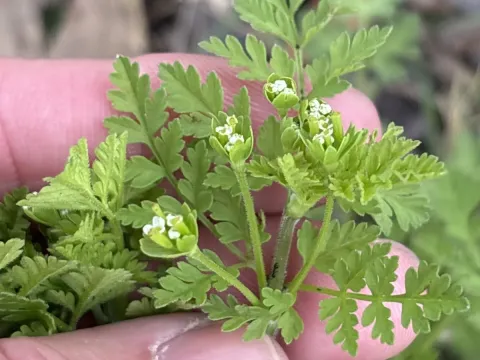
Chaerophyllum tainturieri
Chaerophyllum tainturieri
Chaerophyllum tainturieri is a herbaceous plant belonging to the Apiaceae family. It is recognized for its adaptability and potential as a forage crop, particularly in early spring when other green fodder sources are limited in availability.
What the section contains
Chaerophyllum tainturieri
The sowing process begins in early spring, once the soil has warmed and reached optimal moisture levels. The seeds should be sown at a shallow depth of approximately 1-2 centimeters to ensure adequate germination while preventing excessive energy expenditure by the seedling.
Sowing rates must be optimized based on soil fertility and the intended end-use of the crop. For green fodder production, a higher plant density is recommended to maximize biomass yield per hectare, typically using standard row spacing of about 15-20 centimeters.
Winter sowing is also feasible in regions with mild winters, allowing the plants to initiate growth immediately when temperatures rise. This practice provides a significant head start, resulting in an earlier harvest and better utilization of winter moisture.
Preparing a fine, firm seedbed is essential for successful establishment. Ensuring uniform seed distribution and proper soil contact promotes consistent emergence across the entire field, which is vital for efficient mechanical harvesting later in the season.
##requirements##The crop thrives in well-drained, fertile soils with a neutral or slightly acidic pH. Rich loam soils are ideal, providing both the necessary structure and nutrient availability required for the rapid early development characteristic of this species.
Adequate moisture is critical, especially during the vegetative growth phase. While the plant shows some tolerance to temporary dry spells, consistently high yields depend on stable soil moisture levels throughout the spring and early summer period.
Temperature requirements are moderate; the plant prefers cooler growing conditions. High heat during mid-summer tends to trigger premature flowering, which reduces the quality of the foliage and significantly lowers the nutritional value of the biomass.
Sunlight is a key growth driver, though the species is versatile enough to tolerate partial shade. This flexibility allows it to be integrated into diverse agroforestry systems or mixed cropping patterns without significant losses in productivity.
Good soil management practices, including annual maintenance of nutrient levels and effective weed control, are necessary for high-yield farming. Limiting weed competition during the seedling stage is particularly important to prevent early growth suppression.
Fungal diseases, including powdery mildew and various types of rusts, represent the most significant threat to the crop, especially in humid conditions. Managing airflow within the canopy is essential to reduce the risk of pathogen outbreaks.
Pests such as aphids and various weevils can damage young shoots and developing flowers. Integrated pest management strategies, involving regular crop inspection and targeted interventions, are necessary to protect the potential biomass yield.
Root rot, often caused by poor soil drainage or improper rotation, can weaken the plant stand. Ensuring good field drainage and strictly following crop rotation cycles help mitigate the survival and spread of soil-borne pathogens.
Wireworms and other soil-dwelling larvae can cause severe damage to the root systems of young plants. Pre-sowing soil treatments and careful monitoring of pest pressure are standard practices to prevent significant loss of stand density during the early development phase.
To minimize disease pressure, farmers should avoid overly dense plantings that create stagnant air conditions. Furthermore, keeping the field edges free of common weed hosts can help prevent the migration of pests and pathogens into the crop.
Harvesting for green fodder should be timed to occur before the plants reach full bloom. At this stage, the protein content is at its peak, and the structural fibers are not yet fully lignified, ensuring the highest digestibility for livestock.
Mechanical harvesting using forage harvesters or mowers is standard. It is important to set the cutting height carefully to avoid damaging the crown of the plant, which is crucial if regrowth for a subsequent cut is expected.
For silage or haylage production, the harvested biomass should be wilted quickly to reach the target moisture content. Timely handling is essential, as the high water content of the fresh forage requires rapid processing to ensure proper fermentation.
If producing seeds, the harvest should be carried out when the seeds reach physiological maturity but before they begin to shatter. Swathing followed by threshing allows for maximum recovery of viable seed while minimizing harvesting losses.
Post-harvest management involves drying the seeds thoroughly to a stable moisture level, usually below 14 percent. Proper storage in cool, dry conditions is necessary to maintain high germination rates for future planting seasons.