
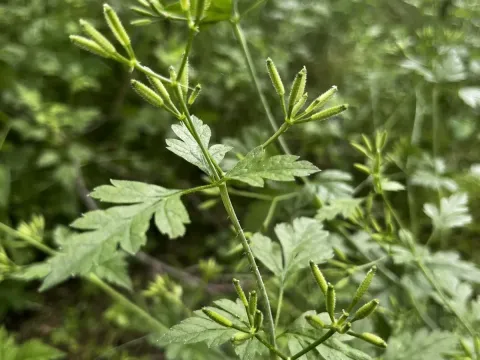
Chaerophyllum nodosum
Chaerophyllum nodosum
Chaerophyllum nodosum is an annual plant that starts its growth cycle in early spring. In natural habitats, seeds require a period of winter stratification to break dormancy and ensure uniform germination once soil temperatures rise to suitable levels.
What the section contains
Chaerophyllum nodosum
For commercial cultivation, planting should be done as soon as the soil is workable, typically when temperatures reach 5–8 degrees Celsius. Providing consistent soil moisture is crucial during the germination phase to support the delicate root development.
Seeds should be sown at a shallow depth of 1–2 centimeters in well-prepared, fine-textured soil. Row spacing should be adjusted to allow for adequate ventilation and easy mechanical weeding between the rows.
Maintaining an optimal plant density is vital; overcrowded plants often show stunted growth and increased susceptibility to fungal diseases due to poor air circulation within the canopy.
Effective stand establishment relies on eliminating competitive weeds early in the season, as the initial growth rate of Chaerophyllum nodosum is relatively slow compared to common agricultural weeds.
Belonging to the Apiaceae family, this species thrives in fertile, well-drained loamy soils. It prefers a neutral to slightly alkaline pH and requires a site with good organic matter content to support its vegetative growth.
The plant is light-demanding and performs best in full sun exposure. While it can tolerate partial shade, significant shading will lead to thinner stems, reduced biomass production, and lower essential oil content.
Water requirements are moderate, but the plant is sensitive to both waterlogging and extreme drought. Irrigation should be managed to keep the soil moisture levels consistent, particularly during the rapid vegetative development phase.
Nutrient management should focus on balanced nitrogen application, avoiding excessive levels that might promote succulent, weak growth prone to lodging or pest attacks.
Good soil structure is essential, as the plant develops a taproot system that requires deep, aerated soil to function efficiently and access subsoil moisture during drier intervals.
Fungal pathogens such as powdery mildew represent the primary disease threat, particularly in humid and stagnant air conditions. Fungicide treatments or preventative cultural practices like wider spacing can mitigate these risks.
Pests such as the parsnip webworm or aphids can cause significant damage to the floral parts and leaves. Integrated pest management strategies, including regular field scouting, are necessary to prevent population outbreaks.
Root rot caused by various soil-borne pathogens can occur if the field has poor drainage or if previous crops in the rotation shared similar susceptibility, such as other Apiaceae species.
Weed pressure remains a major challenge; persistent weeds compete for nutrients and light while acting as reservoirs for various viruses that can affect the crop quality.
Maintaining high hygiene standards for seed lots and implementing crop rotation with non-host families are the most effective ways to minimize the impact of biological threats.
Harvesting for biomass should ideally occur at the onset of the flowering stage, which represents the point of maximum accumulation of desired plant compounds and nutritional value.
Mechanical harvesting is generally used, employing mowers that can be adjusted to the height of the canopy to ensure clean cuts and efficient loading of the green matter for processing.
Seed harvesting requires precision as the seeds mature unevenly. Harvesting should take place when the umbels show signs of darkening and the seeds are firm, but before natural shattering begins.
Post-harvest handling requires immediate drying in well-ventilated, shaded facilities to preserve the volatile components and prevent moisture-related microbial spoilage.
Final storage should be in cool, dry conditions using breathable packaging to ensure the longevity of the plant material, maintaining its quality for market or secondary industrial use.