
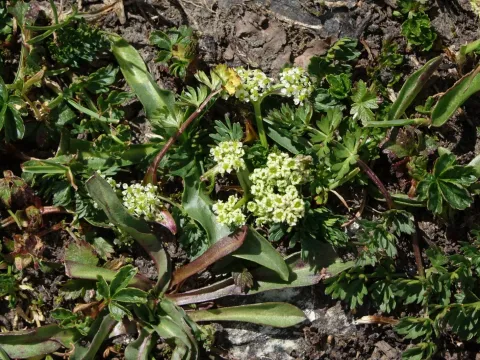
Chaerophyllum humile
Chaerophyllum humile
Chaerophyllum humile is a perennial herbaceous plant belonging to the Apiaceae family. It is typically adapted to subalpine and mountainous environments, thriving in cool climates where it forms a robust part of the local flora.
What the section contains
Chaerophyllum humile
The plant requires well-drained, nutrient-rich soils to reach its full development potential. Loamy and sandy-loam soil compositions provide the best balance of moisture retention and aeration, which is essential for healthy root system establishment.
It displays remarkable frost tolerance, enabling it to survive the harsh winters of mountainous regions. However, it requires sufficient sunlight during the growing season to ensure optimal photosynthetic activity and development of the aerial biomass.
Agrotechnical management includes regular soil cultivation and weed control, especially during the early growth stages. Keeping the soil surface loose promotes better oxygen exchange and supports the plant's structural integrity.
Water requirements are moderate, but consistent moisture is necessary during the early spring vegetative push. Avoiding waterlogged conditions is crucial, as excess stagnant water can predispose the plant to various physiological stresses.
The agricultural utility of Chaerophyllum humile lies primarily in its potential as a forage resource in high-altitude farming systems. Its high nutritional content makes it an excellent candidate for inclusion in animal feed mixes.
Harvesting usually aligns with the peak vegetative growth phase, just before full maturity, to capture the highest concentration of nutrients. The yield is highly dependent on planting density and the implementation of fertility programs.
The plant is also recognized for its medicinal potential, as various parts contain bioactive compounds that are valued in pharmaceutical research. Strategic harvesting can allow for both forage and botanical raw material production.
With proper management, the crop can provide multiple harvests within a single growing season. This versatility increases its economic appeal for landowners looking to utilize marginal or highland terrain effectively.
Future prospects for this crop include improving its genetic stability through selection, aiming to maximize biomass output while maintaining its characteristic hardiness against local environmental stressors.
Fungal diseases constitute the primary threat to the stability of Chaerophyllum humile crops. Powdery mildew and various leaf spot pathogens can significantly damage foliage quality if environmental conditions favor their spread.
Insect pests such as aphids are frequent concerns, particularly when they cluster on young stems. Effective management involves monitoring plant health and utilizing either biological control agents or targeted pesticides.
Root system health can be compromised by water management issues or soil-borne pathogens. Maintaining a rigorous crop rotation schedule helps mitigate the accumulation of specific soil diseases in the fields.
Weed interference is most problematic during the establishment year. Competitive pressure from invasive species can stunt the growth of young Chaerophyllum plants, making timely manual or mechanical weeding necessary.
Sustainable protection measures rely on a combination of cultural practices, such as proper spacing and field hygiene, which reduces the necessity for heavy chemical intervention while safeguarding the final crop quality.