
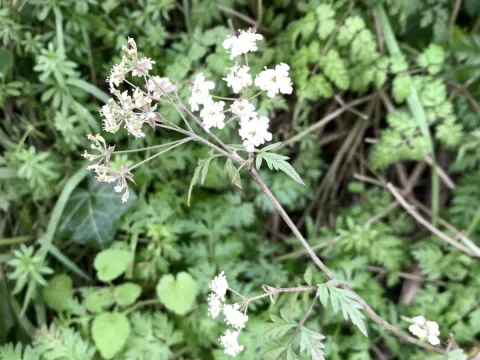
Chervil
Anthriscus
Chervil, specifically the common garden chervil (Anthriscus cerefolium), is an early-maturing crop that is sown in open fields in early spring, as soon as the soil warms up to 5-8 degrees Celsius.
What the section contains


Chervil
To ensure a continuous supply of fresh greens throughout the growing season, a staggered sowing strategy with 15-20 day intervals is recommended.
Autumn sowing is conducted at the end of August, which allows for harvesting in late autumn or early the following spring, provided the winter is mild.
The sowing depth in light soils should be approximately 1 to 1.5 centimeters, and it is crucial to maintain soil moisture for uniform germination.
Row planting with spacing of 20-25 centimeters between rows is standard, as it facilitates plant maintenance and soil cultivation.
Chervil thrives in fertile, loose, and well-moistened soils, performing best in light loams or sandy soils with a neutral pH level.
The crop is cold-hardy; seedlings can tolerate brief frosts down to minus 5 degrees, but an optimal growth temperature ranges between 15 and 20 degrees Celsius.
The plant is shade-tolerant: in partial shade, the leaves remain tender and aromatic for a longer period, whereas direct sunlight triggers premature bolting.
Regular irrigation is a critical requirement, as drought causes the leaves to become tough and bitter, while significantly slowing down vegetative biomass production.
To achieve high yields, soil should be enriched with humus or compost, as the crop is demanding regarding available nutrients during its early growth phase.
Chervil yields depend directly on lighting and moisture conditions, averaging between 1.5 to 3 kilograms of fresh leafy mass per square meter of cultivated area.
With intensive agricultural practices and proper crop rotation, growers can achieve up to 3-4 full harvests of the leaf rosettes in a single season on the same plot.
Maximum productivity is achieved when the plants reach a height of 15-25 centimeters, just before the stage of intensive floral stem formation.
The use of modern selected varieties allows for extending the useful harvest window, which positively impacts the final volume of marketable produce.
The economic use of this crop includes its application in culinary arts, as well as its utility as a valuable honey plant and an aromatic component in essential oil production.
The most common disease affecting chervil is powdery mildew, which develops on leaves during hot weather under conditions of high air humidity.
Plants are frequently attacked by aphids, which suck sap from young leaves, causing leaf deformation and stunted growth of the entire plant.
In waterlogged soil conditions, root rot may develop, resulting from water stagnation and poor aeration in the plant's root zone.
To prevent the spread of pests, it is recommended to maintain spatial isolation from other Apiaceae crops and perform regular weeding.
The use of chemical pesticides on chervil is undesirable, therefore, threat management should be based on preventative measures and timely harvesting of the produce.
Harvesting is performed by cutting young leaves or the entire rosette when the plants reach 15–20 centimeters in height, usually 40–50 days after sowing.
For large-scale production, it is preferable to harvest in the early morning hours, when the leaves are fully turgid and exhibit optimal commercial quality.
Cut greens should be cooled immediately or wrapped in film, as they have a high respiration rate and wither rapidly when exposed to air.
If the purpose of cultivation is seed production, the plants are left on the bed until the umbels turn brown, followed by mowing and threshing.
After the main harvest, the plot should be deeply plowed to destroy remaining root systems and prevent uncontrolled self-seeding of the plant.