
Cnidium dauricum
Cnidium dauricum
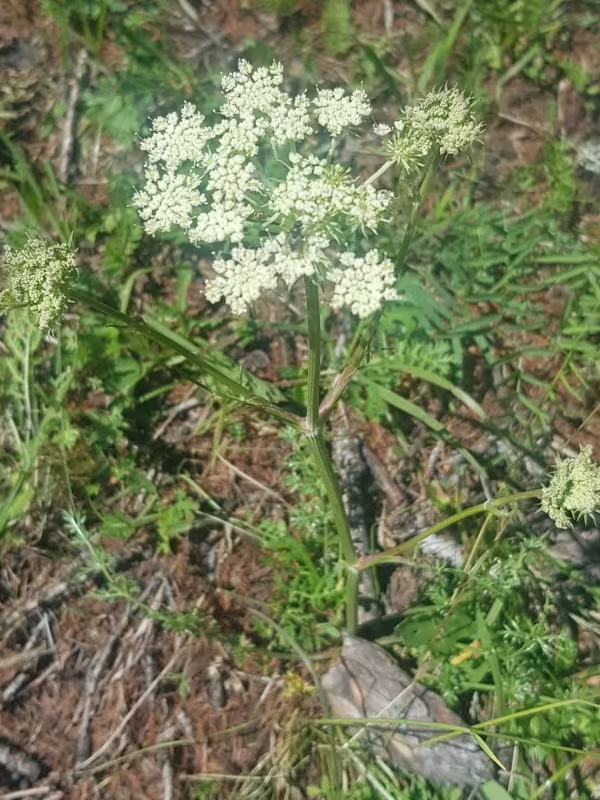
Description
Sowing dates
Cnidium dauricum is a perennial herbaceous plant belonging to the Apiaceae family. Sowing is typically performed in late autumn or early spring, as the seeds require cold stratification to ensure uniform germination.
Preparation of the seedbed is critical; the soil must be fine-tilled and free of perennial weeds to prevent competition with the slow-growing seedlings during the first few weeks.
Seeds should be sown at a depth of 1.5 to 2 cm. Maintaining consistent soil moisture during the germination phase is essential for establishing a healthy crop density.
The recommended row spacing for commercial cultivation is between 45 and 60 cm, which allows for effective mechanical weeding and soil aeration during the growing season.
Seeding rates usually range from 4 to 6 kilograms per hectare, depending on the germination rate and the specific soil characteristics of the plantation site.
Growing requirements
Cnidium dauricum thrives in sunny, open locations. Sufficient sunlight is necessary for the proper synthesis of the pharmacologically active compounds within the roots.
The plant performs best in fertile, well-drained loam or sandy loam soils. It is sensitive to waterlogged conditions, which can lead to root degradation.
This crop is highly winter-hardy, well-adapted to regions with harsh winter climates, typical of its native range in Eastern Asia and Siberia.
Proper field maintenance includes regular hoeing between rows to break up soil crusts and promote deep root development. Soil moisture should be managed carefully to avoid stress.
Optimum growth occurs at temperatures between 18 and 22 degrees Celsius. During extreme summer heat, additional irrigation is recommended to prevent early flowering.
Yield
The primary economic product is the root, which is harvested for its high content of coumarins and essential oils used in traditional and modern medicine.
Yields of dried roots generally range from 1,500 to 2,500 kilograms per hectare, depending heavily on the soil fertility levels and the standard of agricultural care.
Application of phosphorus and potassium fertilizers during the active growth phase promotes larger root mass and enhances the overall plant health.
Harvesting is usually delayed until the second or third year, ensuring that the roots have reached maximum maturity and contain peak concentrations of active substances.
Post-harvest processing involves washing the roots to remove soil, followed by slicing them into uniform pieces to ensure rapid and even drying.
Main diseases and pests
The crop is susceptible to fungal diseases such as powdery mildew, which can significantly damage leaf tissues if humidity remains high for extended periods.
Pests, particularly aphids and larvae of specific umbelliferous moths, can infest the foliage, requiring integrated pest management strategies.
Effective disease prevention relies on sound crop rotation practices, ensuring that the plant is not replanted in the same field within a 4 to 5-year cycle.
Root rot is a common threat in poorly drained soils. Management of water runoff and maintenance of soil structure are the primary defenses against this issue.
- Regular field monitoring for early detection of pest and disease outbreaks.
- Utilizing biocontrol methods to manage insect populations naturally.
- Prompt removal of symptomatic plants to minimize the spread of pathogens.
Harvesting
The harvest period occurs in the autumn of the second or third year, coinciding with the senescence of the above-ground vegetative parts.
Mechanical harvesting equipment, such as root lifters, is used to lift the roots from the soil, minimizing physical breakage and loss of material.
Freshly harvested roots must be cleaned and processed immediately to prevent microbial spoilage and the oxidation of volatile components.
Drying should be conducted in temperature-controlled rooms, maintaining a range of 40–50 degrees Celsius to ensure the highest quality of the final medicinal product.
Storage of the finished product requires a cool, dry, and dark environment to maintain the potency and shelf life of the extracted plant material.