
Cnidium monnieri
Cnidium monnieri
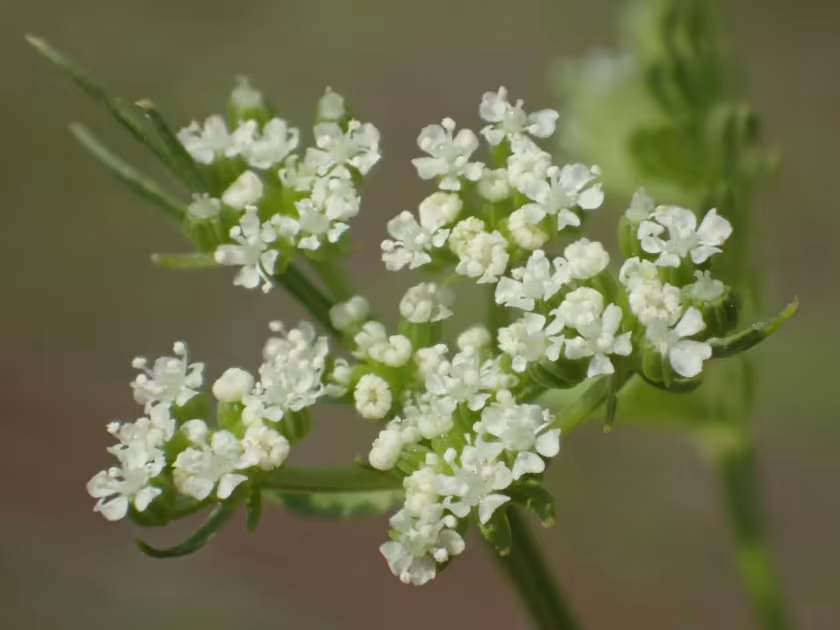
Description
Sowing dates
Cnidium monnieri is an annual herbaceous plant belonging to the Apiaceae family. Successful cultivation requires careful timing, with sowing typically taking place in early spring once the soil temperature consistently reaches 8–10 degrees Celsius.
Early sowing allows the plants to develop a robust leaf rosette before the peak summer heat, which is vital for the accumulation of pharmacologically active compounds. Some growers use late-autumn sowing to capitalize on early spring soil moisture upon snowmelt.
Seeds possess moderate germination energy; therefore, pre-sowing treatments like stratification or soaking are highly recommended. A seeding depth of 1–2 centimeters is considered standard, ensuring that the small seeds are protected from drying out while remaining accessible to emerging sprouts.
Spacing is a critical factor for crop success, with wide-row planting (45–60 cm between rows) being the most common practice. This approach facilitates mechanized cultivation, improves light penetration, and reduces competition for nutrients between plants.
Seedlings typically emerge within 14–20 days after planting, depending on moisture and temperature levels. Maintaining soil moisture during this period is essential to prevent crusting, which can impede the emergence of the delicate seedlings.
Growing requirements
Cnidium monnieri thrives in fertile, well-drained sandy loam or light loamy soils. The plant is highly sensitive to waterlogging, as excessive soil moisture often leads to root rot, which can devastate a plantation in a short period.
As a light-loving species, Cnidium requires open, sunny locations for optimal growth. Lack of sufficient sunlight can negatively impact the synthesis of coumarins, such as osthole, which are the primary compounds of interest in this crop.
The ideal temperature for active growth ranges between 18 and 25 degrees Celsius. While the plant is relatively hardy, it prefers stable environmental conditions and should be protected from harsh winds that may cause damage during the early vegetative phases.
Fertilization should be guided by soil testing results. Nitrogen is essential for vegetative growth, but it should be balanced with phosphorus and potassium to strengthen the root system and improve the plant's overall resistance to environmental stress.
Weed control is mandatory throughout the growing season, especially in the initial stages. The slow growth of Cnidium makes it vulnerable to competitive weeds, necessitating frequent inter-row cultivation to ensure the crop is not choked out.
Yield
Yields of Cnidium monnieri are highly dependent on the quality of the seed stock and strict adherence to agrotechnical protocols. In intensive farming systems, growers can expect an average yield of 800 to 1200 kilograms of seeds per hectare.
The concentration of bioactive components in the final product is often more important than the gross tonnage. Quality control during the growing phase, including optimized watering during the flowering and seed-setting stages, ensures higher market value.
The use of improved cultivars is gaining popularity among professional growers, as these varieties often demonstrate more uniform maturation and higher resistance to environmental stressors, directly contributing to more predictable yields.
Modern irrigation systems, particularly drip irrigation, are highly recommended to stabilize yields. By providing consistent moisture, farmers can significantly reduce the risk of crop failure and improve the overall density of the seed heads.
Economic returns are optimized when harvesting and post-harvesting are synchronized. Efficient cleaning and processing are required immediately after harvest to maintain the purity and concentration of the plant's medicinal properties.
Main diseases and pests
The crop is susceptible to several pathogens common to the Apiaceae family, most notably powdery mildew, which spreads rapidly in high-humidity conditions or poorly ventilated fields. Preventative measures include proper row spacing to encourage airflow.
Root rots, often caused by Fusarium or Rhizoctonia species, represent a major threat, particularly in poorly drained fields. Crop rotation is the most effective management tool, ensuring that the same land is not used for Cnidium more than once every four to five years.
Pests such as aphids and various weevils can damage young shoots and flower buds, negatively impacting seed development. Regular scouting of the fields is necessary to catch infestations early and apply appropriate control measures, ideally using biopesticides.
Bacterial infections can occur through mechanical wounds created during weeding or equipment usage. Careful handling of the crop and minimizing physical damage are essential to maintaining plant health throughout the vegetative cycle.
- Ensure adequate field ventilation.
- Avoid overcrowding to limit disease spread.
- Practice a 4-year crop rotation schedule.
- Remove infected plant material promptly.
Harvesting
Harvesting should occur when the seeds reach the waxy maturation stage, characterized by the umbels turning a yellowish-brown color. It is critical to harvest before the seeds fully dry out to prevent excessive shattering in the field.
The process is typically mechanized using combines, though careful adjustment of machine settings is required to prevent damage to the seeds. The timing of the harvest is narrow, requiring vigilance to capture the highest seed quality.
After harvesting, seeds must be dried immediately at temperatures not exceeding 40 degrees Celsius. This ensures the moisture content is reduced to safe storage levels without degrading the sensitive essential oils and coumarins.
Storage should take place in cool, dry, and well-ventilated areas, using breathable packaging materials like paper bags. Protecting the harvest from moisture and pests is essential to preserve the medicinal potency over long periods.
Quality assurance testing at the time of delivery to pharmaceutical processors focuses on moisture levels and the concentration of active ingredients like osthole, which determines the overall financial success of the harvest season.