
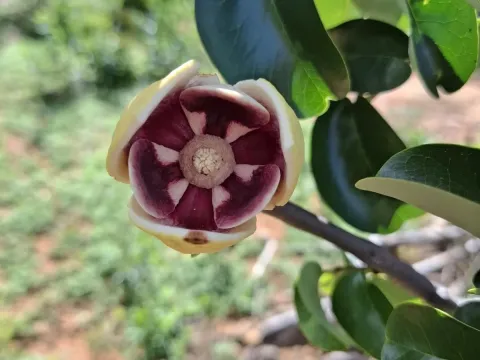
Annona vepretorum
Annona vepretorum
Annona vepretorum is a tropical fruit tree belonging to the Annonaceae family, native to the arid and semi-arid regions of northeastern Brazil, specifically the Caatinga biome.
What the section contains
Annona vepretorum
The species is highly adapted to hot, dry climates, making it an excellent candidate for cultivation in water-scarce regions where other fruit trees often fail to thrive.
The plant grows well in well-drained soils and demonstrates a remarkable tolerance to nutrient-poor substrates, which is a significant advantage for low-input farming systems.
Regarding climate, this tree requires full sun exposure and is highly sensitive to frost, necessitating protection in areas that experience temperature drops near freezing.
Agrotechnical management should focus on early structural pruning to establish a strong scaffold, which optimizes light penetration and ensures balanced canopy development.
The primary economic output of Annona vepretorum is its edible fruit, which is valued for its sweet, pulp-rich texture and distinct tropical flavor profile.
Fruits are consumed fresh by local populations and serve as a key ingredient in regional culinary applications, including juices, smoothies, and artisan sweets.
While naturally resilient to drought, optimal yield is achieved through supplemental irrigation during the critical fruit-set and fruit-development stages of the cycle.
Ongoing research is focused on genetic improvement to increase fruit size and shelf life, which are essential factors for entering wider commercial markets.
The potential for high yields makes it a promising crop for sustainable agroforestry projects aimed at restoring biodiversity while providing economic security to local growers.
A primary challenge in cultivating this crop is managing common fruit pests such as the Annona borer, which can significantly damage the developing fruit and reduce overall yield.
Mealybugs and scale insects may also infest the foliage and succulent stems, weakening the tree and necessitating integrated pest management (IPM) strategies.
Fungal pathogens associated with high humidity or poor orchard ventilation can cause fruit rot and leaf blight, making proper spacing and hygiene essential.
Effective pest control strategies emphasize the use of biological agents or organic-based pesticides to maintain the ecological integrity of the planting area.
Proactive monitoring of the canopy for signs of infestation and the removal of compromised plant material are critical steps in mitigating the spread of disease.
Harvesting Annona vepretorum requires careful manual handling, as the fruits are relatively delicate and prone to bruising if dropped or handled roughly.
The harvest timing is determined by visual changes in the skin texture and color, accompanied by the development of a sweet fragrance that signals peak maturity.
Given that fruits often ripen sequentially, farmers must implement a systematic harvest schedule, inspecting the trees at regular intervals to collect ripe produce.
Post-harvest care involves immediate sorting and packaging to minimize moisture loss and preserve the internal quality of the fruit during transit to market centers.
Establishing consistent quality standards during the harvest process is vital for building a reputation among distributors who prioritize consistent fruit size and ripeness.