
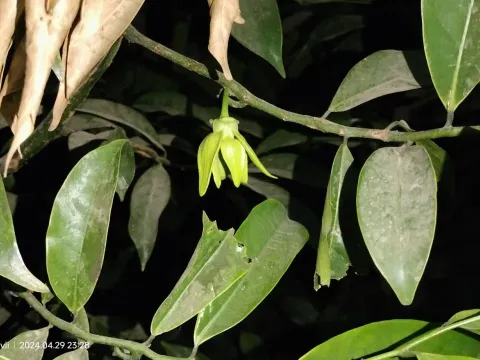
Artabotrys
Artabotrys
Propagation of Artabotrys is primarily conducted via stem cuttings, which is the most reliable method for maintaining desired characteristics. Cuttings should be taken during the early spring when the plant initiates its growth cycle.
What the section contains
 Artabotrys crassifolius
Artabotrys crassifolius
Artabotrys crassifolius
 Artabotrys gracilis
Artabotrys gracilis
Artabotrys gracilis
 Artabotrys hexapetalus
Artabotrys hexapetalus
Artabotrys hexapetalus
 Artabotrys kurzii
Artabotrys maingayi
Artabotrys maingayi
Artabotrys kurzii
Artabotrys kurzii
Artabotrys maingayi
Artabotrys maingayi
 Artabotrys monteiroae
Artabotrys pleurocarpus
Artabotrys pleurocarpus
Artabotrys monteiroae
Artabotrys monteiroae
Artabotrys pleurocarpus
Artabotrys pleurocarpus
 Artabotrys siamensis
Artabotrys siamensis
Artabotrys siamensis
 Artabotrys zeylanicus
Artabotrys zeylanicus
Artabotrys zeylanicus
Artabotrys
Seed propagation is also possible but requires strict temperature control, specifically between 25 and 30 degrees Celsius. Fresh seeds show the highest germination rates, whereas stored seeds lose viability quite rapidly.
The substrate for germination must be well-draining, consisting of a mix of peat, perlite, and coarse sand. Keeping the seedbed consistently moist without waterlogging is essential for successful seedling development.
After transplanting, young Artabotrys plants need a period of acclimatization. Gradually exposing them to increased light levels prevents leaf burn and promotes strong, healthy stem elongation.
The use of professional nursery containers is recommended to provide sufficient root space. Proper spacing between individual plants ensures that each specimen receives adequate light and airflow, which is critical for healthy development.
Artabotrys belongs to the Annonaceae family and is native to tropical regions of Asia and Africa. It is a climbing shrub that thrives in warm, humid climates and requires a stable temperature profile throughout the year.
The soil should be fertile, acidic to neutral in pH, and highly permeable. In agricultural practice, adding organic compost to the soil mix improves moisture retention while preventing the risk of root suffocation.
Light requirements are significant; while Artabotrys tolerates partial shade, full production and flowering occur best in bright, filtered light. Protecting the plant from harsh afternoon sun is recommended.
Adequate support systems, such as strong trellises or arbors, are essential for this plant. As a vigorous climber, it needs to be trained to ensure that its branches are distributed evenly for optimal light interception.
Fertilization schedules should focus on nitrogen during the early stages, shifting to potassium and phosphorus before the flowering season. Regular monitoring of the soil moisture is vital to avoid drought stress, which can cause flower drop.
Common pests affecting Artabotrys include spider mites and scale insects. These organisms thrive in dry environments, so maintaining proper humidity levels is a natural way to deter most infestations.
Fungal diseases, specifically root rot, occur when drainage is poor. To mitigate this, ensure that containers have large drainage holes and that irrigation is adjusted according to the plant's actual water uptake.
Leaf spot diseases can also occur if air circulation is restricted. Pruning the foliage to open up the canopy helps reduce the humidity trapped inside the vine, thereby decreasing the risk of pathogenic growth.
Nutrient deficiencies, particularly iron chlorosis, can cause yellowing of the leaves. This is often linked to an improper soil pH, which locks out micronutrients; applying chelated minerals can effectively resolve this issue.
Integrated Pest Management (IPM) practices should be followed to minimize chemical use. Frequent scouting for early signs of disease or pest colonization allows for localized treatment rather than broad-spectrum application.