
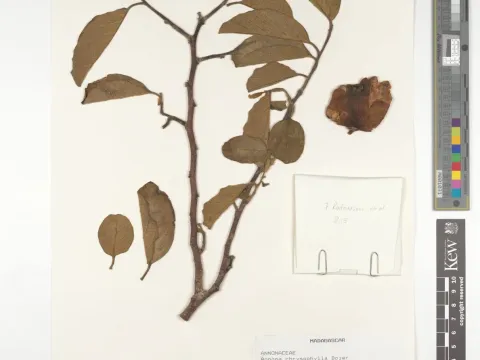
Annona chrysophylla
Annona chrysophylla
Annona chrysophylla is a member of the Annonaceae family, native to tropical regions of Africa. This plant species typically takes the form of a shrub or a small tree, highly regarded within its natural habitat for its nutritious and flavorful fruits.
What the section contains
Annona chrysophylla
The plant thrives in tropical climates where temperatures remain consistently warm throughout the year. It prefers full sun exposure, although young specimens benefit from partial shade during their early development stages to avoid heat stress.
Ideal soil conditions for this species involve well-draining substrates, such as sandy loams or enriched tropical soils. Proper drainage is paramount, as the root system is highly susceptible to rot if exposed to waterlogged conditions for extended periods.
Agricultural management requires consistent moisture levels, particularly during the flowering and fruit-setting phases. Regular application of organic matter helps maintain soil fertility, which directly correlates to the quality and size of the harvested fruits.
The primary use of Annona chrysophylla is as a localized food source, with its fruits consumed fresh. Beyond its agricultural value, the plant is often integrated into traditional herbal practices within its native range.
Common pests affecting this crop include mealybugs and scale insects that colonize the leaves and branches. Regular monitoring and the application of horticultural oils are effective management strategies to keep pest populations under control.
Fungal diseases, specifically those affecting the roots and fruit surface, are prevalent in high-humidity environments. Maintaining proper spacing between trees ensures adequate air circulation, which significantly reduces the incidence of blight and rot.