
Araticum
Annona crassiflora
Description
Growing requirements
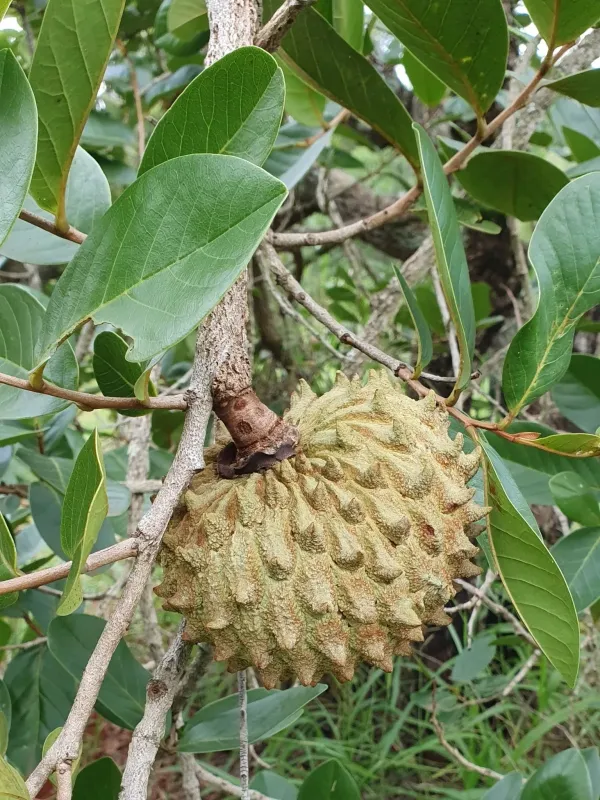
Araticum (Annona crassiflora) is a fruit-bearing tree belonging to the Annonaceae family, native to the Brazilian cerrado. It is highly valued in its home region for its large, aromatic, and nutrient-rich fruits.
The crop thrives in acidic, deep, and well-drained soils typical of tropical savannas. While it is adapted to survive dry seasons, the tree requires consistent warm temperatures, ideally between 20 and 30 degrees Celsius, for optimal fruit production.
Botanically, the species is distinguished by its leathery, thick leaves which aid in water retention. It generally reaches a moderate height of 3 to 6 meters, featuring a robust root system capable of navigating deep soil profiles.
Agricultural management involves careful irrigation during the initial establishment phase and protecting young trees from any frost. Since it is native to open savanna environments, the tree demands significant full-sun exposure to develop healthy canopy and flowers.
The fruit is utilized primarily for fresh consumption and the artisanal food industry. It is commonly processed into ice creams, mousses, and juices, serving as an important source of income for local communities in Brazil.
Main diseases and pests
The primary agricultural threats to Annona crassiflora include various species of fruit flies that target developing ovaries. Additionally, growers must monitor for fungal pathogens like anthracnose that can proliferate during excessively humid periods.