
Anonidium
Anonidium
Anonidium (lat. Anonidium) belongs to the Annonaceae family. It is a tree crop represented mainly by the species Anonidium mannii, which is found in the tropical rainforests of Central and West Africa.
What the section contains

Anonidium
For normal development, the plant requires a consistently humid and hot equatorial climate. Anonidium is extremely sensitive to low temperatures and requires the absence of marked drought periods.
The crop prefers deep, fertile, and well-drained loamy or alluvial soils. An important factor is the high organic matter content in the soil profile, which is typical for forest ecosystems.
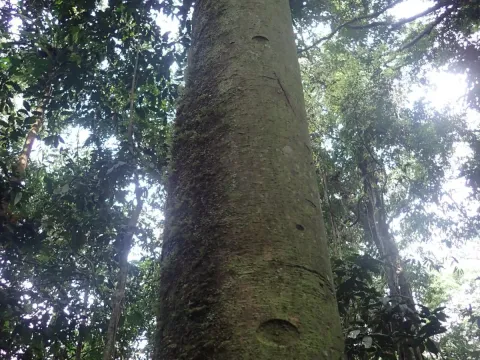
The plant has a specific biology: it is a large tree with a powerful trunk and dense crown. Anonidium leaves are entire, large, leathery, and arranged alternately, ensuring efficient photosynthetic activity under forest canopy conditions.
Economic use is limited to harvesting fruits in places of natural growth. The fruits are among the largest in the Annonaceae family and are highly valued by the local population for their nutritional properties and taste.
Anonidium fruits are massive syncarps, the weight of which can reach several kilograms. The fruit pulp is aromatic, sweet, and has a buttery texture, reminiscent of other Annonaceae species, such as the cherimoya.
Yields in the wild depend heavily on the tree's age and pollination conditions. Since the crop is rarely cultivated on an industrial scale, data on exact yields per hectare are insufficient.
Reproduction of the plant in cultivation is complicated by specific microclimate requirements and the lack of breeding varieties suitable for intensive horticulture.
The fruits have a limited shelf life after harvest, which makes their transportation over long distances economically unfeasible without special packaging.
Nutritional value includes high levels of carbohydrates, vitamins, and trace elements, making Anonidium a promising subject for research in local food security.
The main threats to Anonidium are anthropogenic habitat destruction and forest fragmentation. In wild conditions, the plant often suffers from various fungal diseases.
Pests affecting Annonaceae include specific species of fruit flies that lay eggs in ripening fruits. This can lead to significant crop losses before the point of technical maturity.
Root rots pose a danger when grown in areas with water stagnation or poor soil aeration, which provokes the development of pathogenic microorganisms.
To protect plantings in experimental gardens, it is recommended to use mulching to maintain temperature conditions and implement preventive control against leaf-eating insects.
Rodents and large forest animals often damage bark and young shoots, which weakens the tree and reduces its resistance to climatic stresses.