
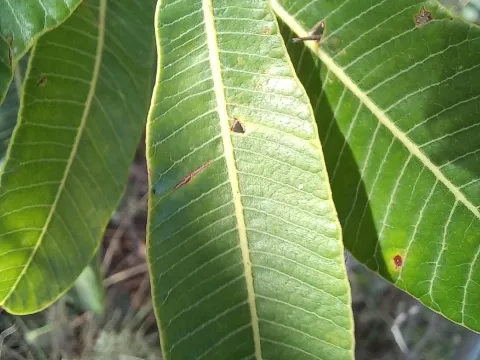
Ozoroa
Ozoroa
Propagation of the Ozoroa genus in its natural environment relies on seed dispersal, often aided by animals that consume the fruit and scatter the seeds across the savanna.
What the section contains
 Ozoroa concolor
Ozoroa concolor
Ozoroa concolor
 Ozoroa crassinervia
Ozoroa crassinervia
Ozoroa crassinervia
 Ozoroa dispar
Ozoroa dispar
Ozoroa dispar
 Ozoroa engleri
Ozoroa engleri
Ozoroa engleri
 Ozoroa insignis
Ozoroa insignis
Ozoroa insignis
 Ozoroa obovata
Ozoroa obovata
Ozoroa obovata
 Ozoroa paniculosa
Ozoroa pulcherrima
Ozoroa pulcherrima
Ozoroa paniculosa
Ozoroa paniculosa
Ozoroa pulcherrima
Ozoroa pulcherrima
 Ozoroa sphaerocarpa
Ozoroa sphaerocarpa
Ozoroa sphaerocarpa
Ozoroa
In cultivation, seeds should be sown shortly after collection, as they tend to lose their viability relatively quickly if kept in improper storage conditions.
Using a well-draining seed mix is essential to simulate the sandy soil conditions to which these plants are naturally adapted and to ensure healthy initial root growth.
Pre-treatment of seeds, such as scarification or thermal exposure, may be necessary to overcome natural dormancy mechanisms and improve germination uniformity.
Timing the sowing process with the start of the rainy season maximizes the chances of seedling survival by providing a stable supply of moisture during the establishment phase.
The Ozoroa genus belongs to the Anacardiaceae family and comprises several species of trees and shrubs native primarily to the African continent.
These plants are highly specialized for life in arid and semi-arid environments, requiring high levels of solar radiation for optimal development throughout the growing season.
Soil requirements are relatively flexible, though the genus strictly demands excellent drainage, as waterlogged conditions are highly detrimental to their health.
Drought tolerance is a defining feature of the genus, allowing it to maintain growth even in areas with minimal rainfall and poor nutrient content in the soil.
Temperature sensitivity is a limiting factor, as most species in this group are not adapted to cold climates and require a frost-free environment to thrive.
The economic value of Ozoroa is primarily derived from its durable timber, which is highly resistant to termite attacks and decay, making it suitable for construction.
Beyond wood production, the plant serves as a vital component in agroforestry systems, contributing to land stabilization and wind erosion control in savanna regions.
Various parts of the tree, including the bark and leaves, are utilized in traditional medicinal practices, highlighting the plant's multifaceted utility for local communities.
While fruit production is not typically the primary focus for industrial farming, it provides a crucial food source for both local wildlife and human populations in some areas.
Yield metrics in an agricultural context are usually measured by the biomass production and the ability of the species to reclaim degraded lands effectively.
Fungal diseases constitute a significant threat to Ozoroa, particularly in cultivation settings where soil moisture levels are not managed with sufficient care.
Pests that target the bark and foliage can severely hamper plant growth, necessitating regular monitoring and integrated pest management strategies to keep trees healthy.
Mechanical damage caused by browsing animals or improper pruning can create entry points for secondary infections, leading to wood rot and reduced tree lifespan.
Environmental stressors, such as excessive soil compaction or improper site selection, weaken the plants, making them more susceptible to localized pathogens.
Proactive management of drainage and careful avoidance of wounding the trunks are essential practices for maintaining the vigor and longevity of Ozoroa trees.