
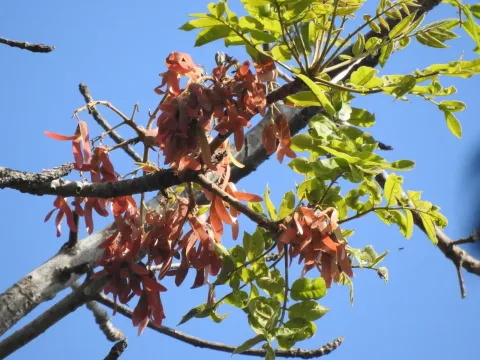
Parishia
Parishia
Parishia is a genus of tropical trees belonging to the Anacardiaceae family. These majestic plants are native to the lush, humid rainforests of Southeast Asia, thriving in regions such as Thailand, Malaysia, and the Philippines.
What the section contains


Parishia
The successful growth of this species requires a specific tropical environment characterized by high temperatures and significant annual rainfall. These trees do not possess cold hardiness and must be grown in climate zones where temperatures remain consistently warm throughout the year.
Regarding soil requirements, Parishia trees prefer deep, fertile, and well-drained soils. In their natural habitat, they often flourish in lowland forests where the soil is rich in organic matter and maintains a high level of moisture without becoming waterlogged.
From an agrotechnical perspective, young trees require careful monitoring of the light environment. While mature specimens are adapted to the forest canopy and full sun exposure, saplings benefit from partial shade and protection from harsh direct winds.
Proper forest management involves ensuring that the site has sufficient natural drainage, as the roots are susceptible to rotting if standing water persists for extended periods. Soil aeration and maintaining the natural microclimate are key factors for healthy development.
The primary economic use of Parishia is for its timber production. The wood is widely utilized in the construction and furniture industries due to its manageable physical properties, including moderate density and workability.
Harvesting strategies for this species are based on sustainable forest management practices. Trees are selected for logging once they reach a specific diameter, ensuring that the surrounding ecosystem is preserved and younger generations of trees can continue to grow.
Post-harvest processing involves rigorous kiln drying to stabilize the moisture content of the wood. This process is essential to prevent warping, splitting, or fungal degradation, ensuring that the final material is durable and ready for commercial use.
The wood's finish is often described as high-quality, making it suitable for interior woodwork, plywood manufacturing, and architectural moldings. Its structural integrity supports its reputation as a reliable source of raw material in tropical regions.
Ongoing research into the growth rates of various Parishia species helps improve the efficiency of plantation forestry, allowing for a better yield of timber while maintaining the ecological balance of the native forested areas.