
Ozoroa crassinervia
Ozoroa crassinervia
Description
Growing requirements
Ozoroa crassinervia is a woody plant species belonging to the Anacardiaceae family, sharing taxonomic characteristics with well-known crops like the cashew and mango. It is native to the arid and semi-arid landscapes of Southern Africa, particularly thriving in parts of Namibia and Angola.
The plant is highly adapted to extreme environmental conditions. It is frequently found growing in rocky habitats or scrublands, demonstrating an impressive capacity to withstand the harsh, dry climates and scorching heat typical of these regions.
In terms of soil requirements, this species favors well-draining substrates, often rocky or sandy soils that offer little organic matter but provide the necessary stability for its root system. It thrives in environments where competition for nutrients and water is exceptionally high.
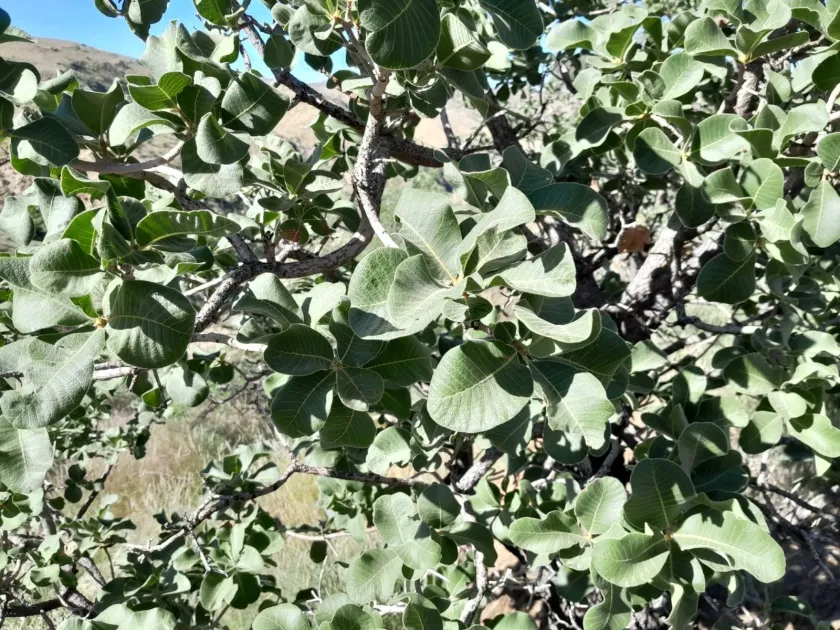
Botanically, Ozoroa crassinervia is recognized by its distinct leathery foliage and pronounced vein structure, which is the origin of its specific epithet. These leaves are structurally evolved to reduce water loss, providing a clear advantage in drought-prone areas.
While not a primary commercial crop, the plant serves important ecological and traditional functions. It acts as a source of browse for local wildlife and has been utilized in traditional medicine practices. Research into its drought-resistant genes remains a point of interest for agricultural biotechnology.