
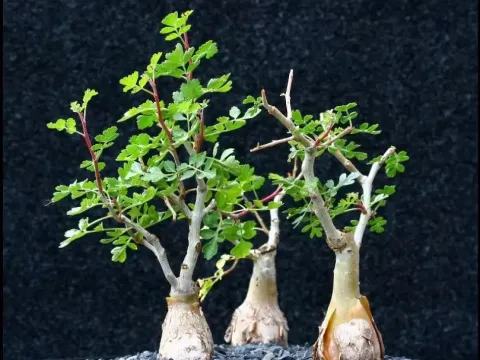
Pachycormus
Pachycormus
Pachycormus discolor, commonly known as the elephant tree, belongs to the Anacardiaceae family. It is a pachycaul succulent tree native to the Baja California Peninsula in Mexico, perfectly adapted to hot and arid environments.
What the section contains

Pachycormus
The plant is characterized by its swollen, fleshy trunk that serves as a vital water storage organ. It possesses small, deciduous leaves that drop during dry periods to reduce transpiration, demonstrating a unique strategy for surviving severe water shortages.
For successful cultivation, Pachycormus requires full sun exposure and warm conditions. It is highly intolerant of frost, making it suitable only for zones with a Mediterranean or arid climate, or as a specialty greenhouse plant in colder regions.
The soil profile must be extremely well-draining, mimicking the rocky substrate of its natural habitat. A mixture of gravel, grit, and very little organic matter is recommended to prevent the roots from remaining in damp conditions for extended periods.
Economically, Pachycormus is primarily valued in ornamental horticulture and botanical collections. Due to its slow growth rate and specialized needs, it is not grown as a commercial crop but serves as a high-value specimen for xeriscaping.
The most significant threat to Pachycormus is root rot caused by overwatering or poorly drained soil media. Maintaining a strict irrigation cycle, especially during the dormant season, is critical to preventing fungal decay of the trunk base.
Pests that frequently infest these trees include mealybugs and spider mites, particularly in indoor or greenhouse settings. Managing these involves proper ventilation and the targeted use of horticultural oils or systemic insecticides when necessary.