
Ozoroa insignis
Ozoroa insignis
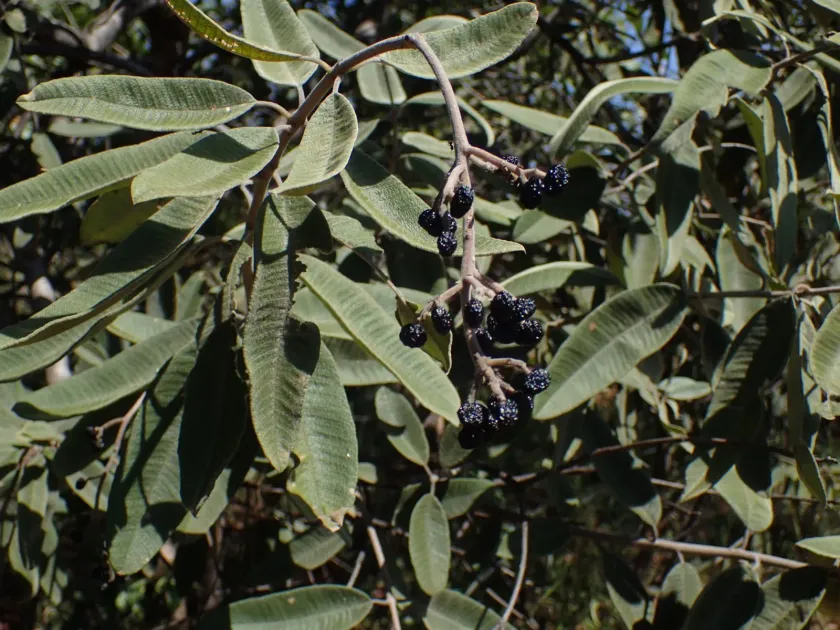
Description
Sowing dates
Ozoroa insignis is primarily managed as a wild-harvested species, though nursery cultivation is increasing. Sowing should coincide with the beginning of the rainy season to ensure natural moisture availability for early development.
Seeds require thorough cleaning to remove the outer pulp, which can contain germination inhibitors. Using a light, well-draining sandy loam substrate significantly improves the germination rate in nursery settings.
Cuttings represent an effective alternative for propagation. These are best taken during the late rainy season, providing sufficient time for the root systems to establish before the onset of the prolonged dry period.
Seedlings should be placed in containers that allow for deep root growth, as the plant naturally develops a substantial taproot early in its life cycle.
Maintaining a consistent environment in the nursery, with bright indirect light, is essential to prevent seedling etiolation and promote robust stems before transplantation.
Growing requirements
Belonging to the Anacardiaceae family, Ozoroa insignis is a quintessential savanna woodland species. It thrives in open, sunny environments and is highly intolerant of shade from larger canopy trees.
The plant demonstrates remarkable adaptation to sandy and rocky soils with low nutrient profiles, making it suitable for areas where more demanding crops would fail. Good aeration of the root zone is the most critical soil requirement.
Optimal growth occurs at temperatures ranging between 22 and 30 degrees Celsius. The species is highly drought-tolerant, utilizing deep root structures to access subsoil water during arid months.
Soil pH should ideally be neutral to slightly acidic. Waterlogging is detrimental to the plant and frequently leads to physiological stress or the onset of necrotic spots.
The plant requires adequate spacing when grown in plantations to ensure maximum solar radiation capture and to prevent the buildup of humidity around the foliage.
Main diseases and pests
The primary threats to Ozoroa insignis involve fungal pathogens that emerge under conditions of poor soil drainage or stagnant air. Leaf spot diseases are common in humid, unventilated plantations.
Insect pests, including aphids and leaf-eating caterpillars, can cause significant damage to young shoots, potentially stunting growth if left unmanaged during the peak development season.
Root rot, often caused by pathogens like Phytophthora, is a common issue when the plant is exposed to excessive irrigation or poor site selection on clay-heavy soils.
Integrated pest management strategies are recommended, focusing on the preservation of natural predators and ensuring optimal plant spacing to minimize disease spread.
Regular monitoring of the foliage and stem bark is essential, as localized infections can spread rapidly throughout a dense plantation if not addressed early.
Harvesting
The harvesting of resin is a precise operation that involves carefully incising the stem bark. This practice must be done during the plant's dormant period to minimize physiological impact on the tree.
Leaves and bark intended for pharmacological use are ideally harvested at the end of the rainy season, as this is when the concentration of secondary metabolites is typically at its peak.
Post-harvest management requires rapid drying in well-ventilated, shaded areas. Moisture content must be significantly reduced to preserve the chemical composition of the resins and prevent fungal contamination.
Sustainable harvesting techniques, such as avoiding continuous circular bark removal, are essential to ensure the longevity of the individual trees and the productivity of the resource site.
Stored raw materials should be placed in moisture-resistant containers within a cool environment to maintain the potency of the essential resins over extended periods.