
Pistacia khinjuk
Pistacia khinjuk
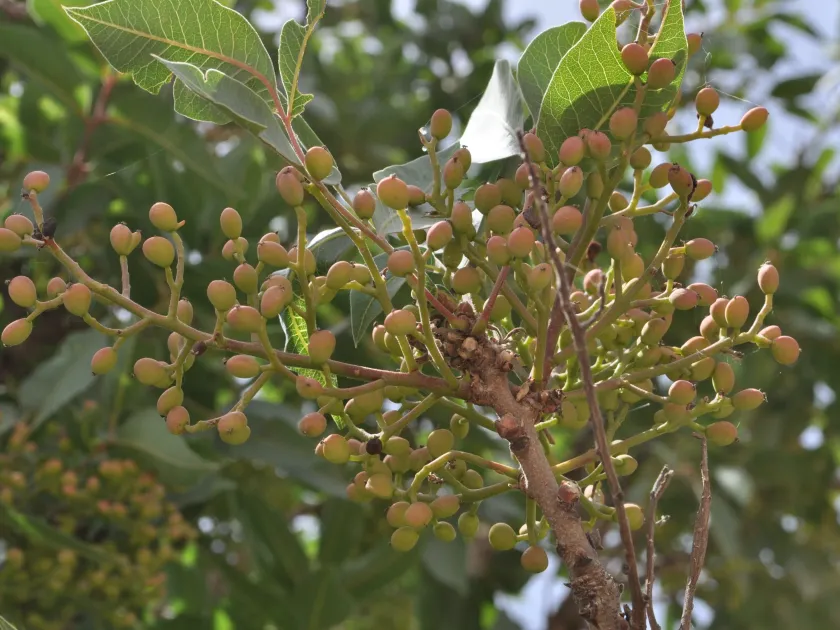
Description
Growing requirements
Pistacia khinjuk is a deciduous tree belonging to the Anacardiaceae family. It is native to the mountainous regions of Western Asia, specifically Iran, Afghanistan, and parts of the Middle East, where it grows in harsh, arid climates.
The tree is exceptionally drought-tolerant and xerophytic, adapted to survive on rocky slopes with extremely limited precipitation. Its massive root system allows it to extract moisture from deep soil layers, which also provides excellent soil stabilization.
The culture thrives in areas with long, hot, and dry summers, which are essential for its physiological maturation. High atmospheric humidity is detrimental to the tree, as it significantly increases the risk of fungal infections and inhibits growth.
Soil requirements for Pistacia khinjuk include high permeability and good drainage. The species is highly tolerant of calcareous and rocky soils, often thriving where other fruit-bearing species fail to establish due to low nutrient content.
In modern agricultural systems, Pistacia khinjuk is primarily valued as a robust rootstock for cultivated Pistacia vera. Its resilience to local pests and soil conditions makes it a preferred choice for dryland orchard management.
Main diseases and pests
Root rot is the most serious threat to Pistacia khinjuk, typically occurring when the tree is grown in heavy or waterlogged soil. Proper site selection and avoiding irrigation excess are critical measures to prevent the loss of plantations.
Pistachio psyllids are the most common insect pests associated with this species. They feed on young foliage, causing leaves to curl and reducing the plant's overall vitality. Severe infestations may lead to stunted development of young trees.
Various species of aphids and scale insects can also affect the tree by clustering on succulent shoots. While these pests are rarely fatal, they can weaken the plant and serve as vectors for secondary bacterial or fungal infections.
Wood-boring insects, such as bark beetles, generally target trees that are already suffering from drought stress or mechanical injuries. Maintaining tree vigor through proper pruning and clearing deadwood is the primary defense strategy.
Integrated pest management, including regular monitoring and the use of targeted biological controls, is recommended to manage populations without disrupting the ecosystem in and around the pistachio grove.