
Ozoroa dispar
Ozoroa dispar
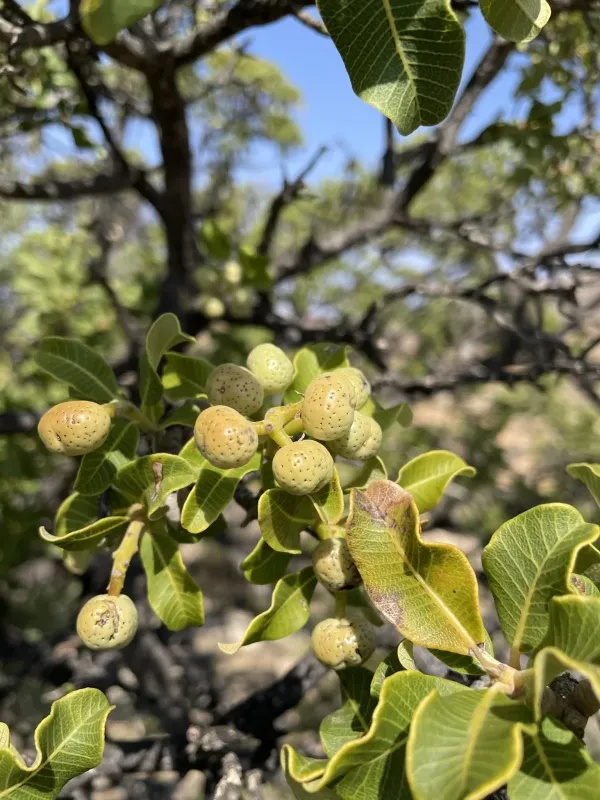
Description
Growing requirements
Ozoroa dispar is a species within the Anacardiaceae family, recognized for its adaptation to the arid environments of Africa. It is a perennial shrub that exhibits significant resilience to environmental stressors, particularly those related to moisture availability.
The plant thrives in well-drained, sandy, or rocky soils, reflecting its natural habitat in savannas. Proper soil aeration is crucial for the development of its root system, and heavy, water-retentive soils must be avoided to prevent fungal issues.
Climate requirements for Ozoroa dispar include high levels of solar radiation and a warm environment throughout the year. It does not tolerate freezing temperatures, which necessitates greenhouse cultivation in temperate regions to ensure its survival during the winter months.
Agrotechnical management focuses on minimal irrigation, as excessive watering is detrimental to the plant's health. Fertilizer application should be managed carefully, favoring nutrient-poor but mineral-rich substrates to simulate natural conditions.
Propagation is typically achieved through seeds or stem cuttings, which require precise environmental controls to succeed. Providing a stable environment with moderate humidity is essential during the initial stages of plant establishment.
Yield
As a non-traditional agricultural crop, Ozoroa dispar does not have standard yield metrics associated with commercial production. Its value is predominantly ecological and ornamental rather than commodity-based.
In environmental management, the species serves as an effective tool for soil stabilization and erosion control in arid areas. Its deep root architecture plays a vital role in maintaining soil structure in vulnerable landscapes.
Ornamental horticulture uses the plant for xeriscaping, where its distinctive foliage and growth form add structure to dry-climate garden designs. Its ability to maintain aesthetic appeal with very little input is a major benefit for water-wise landscaping.
The potential for pharmacological or industrial use of the resinous substances produced by the plant remains a subject of investigation. Studies aim to identify active compounds that could be useful in sustainable chemical applications.
Overall, the cultivation of Ozoroa dispar contributes to the promotion of biodiversity and the creation of resilient, low-maintenance landscapes. It represents a functional plant choice for sustainable development in regions facing increasing water scarcity.