
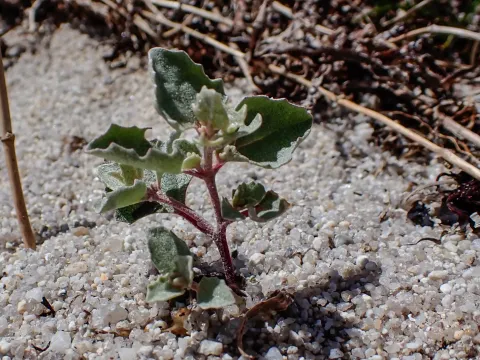
Frosted orache
Atriplex laciniata
Frosted orache (Atriplex laciniata) is an annual herb belonging to the Amaranthaceae family. It is recognized for its unique adaptation to maritime habitats, specifically sandy beaches and coastal dunes.
What the section contains
Frosted orache
As a halophyte, it requires soil conditions that would be toxic to most conventional agricultural crops. It thrives in high-salinity environments where sodium levels are sufficient to suppress competing vegetation.
The plant demonstrates a strong preference for well-drained, porous soils. Sunlight exposure is critical for the development of its characteristic silvery foliage, which helps the plant mitigate intense solar radiation.
The distribution range is largely defined by the coastlines of the North Atlantic and the Baltic Sea. Its role in the ecosystem is primarily to stabilize shifting sands, preventing erosion in fragile coastal zones.
Botanically, it is defined by its triangular, laciniate leaves covered in fine, scaly hairs. These structures are instrumental in salt excretion and moisture retention during periods of drought or high salinity.
The primary threats to Atriplex laciniata include fungal pathogens that thrive in stagnant water conditions. Poor drainage is the most significant environmental stressor that leads to root system degradation.
Insect pests, particularly aphids and leaf miners, can cause localized damage to the photosynthetic tissue. While the plant is resilient, severe infestations during the seedling stage can significantly impair growth.
Invasion by non-native plant species often outcompetes this species, as it is a relatively slow starter in the early spring season. Proper spatial management is necessary to maintain a healthy population.
Climate change and rising sea levels can lead to unpredictable tidal flooding, which, despite the plant's salt tolerance, can lead to mechanical damage during storm surges.
Integrated pest management strategies focusing on early detection and maintaining optimal soil aeration are recommended to prevent potential losses during cultivation efforts.