
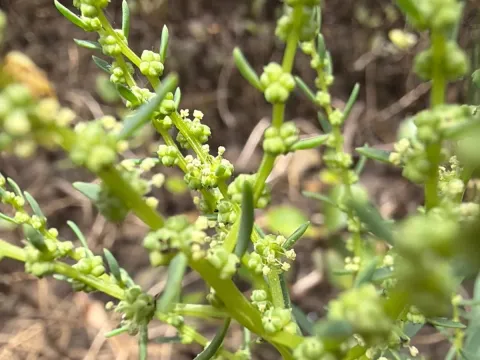
Suaeda
Suaeda Forssk. ex J. F. Gmel.
Suaeda is a genus of salt-tolerant plants belonging to the Amaranthaceae family, highly valued for its ability to thrive in saline environments. Seed sowing requires careful consideration of soil temperature and moisture to ensure successful germination across diverse environmental conditions.
What the section contains


Suaeda
The optimal sowing period begins in early spring once soil temperatures have consistently reached 10-12 degrees Celsius. Ensuring proper soil contact for the seeds is essential, as the fine seeds are sensitive to moisture fluctuations during the critical early emergence phase.
Sowing depth should be kept shallow, typically between 0.5 to 1.5 centimeters. Deeper planting can hinder emergence, while surface sowing risks rapid desiccation, therefore precise mechanical adjustment of seeding equipment is vital for success.
Seeding rates are adjusted based on the specific species and desired plant density. A typical range of 5-8 kilograms of seeds per hectare is common, though this can be refined based on soil fertility and the expected presence of competing vegetation in the field.
In addition to standard agricultural sowing, natural regeneration is a significant factor. Farmers often leave small strips of the field for self-seeding to ensure continuity of the crop in subsequent years without the need for additional sowing operations.
Suaeda is primarily known as a halophyte, an organism that thrives in soils with high concentrations of sodium chloride and other mineral salts. This unique ability makes it a prime candidate for the reclamation of secondary saline lands.
The crop demonstrates remarkable drought resistance, a trait derived from its succulent stems and leaves that store water efficiently. This adaptation allows it to remain productive in arid climates where other conventional crops would fail due to water stress.
Light requirements are significant; Suaeda is a heliophilic plant that demands full exposure to sunlight. Shading from neighboring structures or taller weeds will result in stunted growth and a considerable reduction in total biomass production.
While the plant excels in poor soils, supplemental nutrients such as nitrogen and phosphorus can improve overall yield. Soil pH balance is typically maintained in the alkaline range, which aligns with the plant's natural preference in saline desert and coastal regions.
Proper drainage is necessary to prevent the waterlogging of roots. Even though the plant is salt-tolerant, it requires oxygen in the root zone to sustain metabolic activity, meaning that excessive soil moisture can be detrimental during periods of extreme heat.
The yield potential of Suaeda is heavily influenced by the level of irrigation and the degree of soil salinity. Under managed agricultural conditions, green biomass yields can reach 15-25 tons per hectare per growing season through multiple harvesting cycles.
Harvesting strategies often involve cutting the crop during the peak vegetative phase, just before the plant enters its full flowering stage. This timing ensures the highest nutrient content and palatable biomass for potential forage or industrial use.
Secondary yields can be achieved through regrowth if the plant is harvested before it becomes overly woody. Regular maintenance of the soil moisture levels post-harvest helps stimulate the development of fresh, high-quality shoots for the next cycle.
Product quality depends heavily on the harvesting timeline. Late harvesting leads to an increase in fiber content, which may reduce the digestibility of the crop for livestock, thus shifting the economic value of the produce.
Selecting high-performing varieties is becoming increasingly important as Suaeda moves from wild-harvested status to a managed crop. Ongoing research focuses on improving uniformity and biomass consistency across different fields and soil types.
Suaeda shows strong natural resistance to most common crop pathogens. The saline sap serves as a chemical defense mechanism, effectively inhibiting the colonization and growth of many fungal and bacterial organisms that typically plague traditional crops.
Soil-dwelling insects, such as wireworms, can pose a risk during the germination phase by attacking the root systems of young seedlings. Integrated pest management strategies, including crop rotation, are often sufficient to keep these populations under control.
While pests are generally not an issue, extreme climate events like prolonged unseasonable rainfall can lead to root rot if the soil structure remains saturated. Maintaining proper field drainage is the best preventative measure against this threat.
Leaf-eating insects are rare on Suaeda due to the high mineral salt content of its tissues, which acts as a deterrent. Constant monitoring of the fields is recommended, primarily to detect any unusual shifts in local insect populations that could potentially spill over.
Overall, the health of Suaeda stands is high. Its resistance to pests reduces the need for chemical pesticides, which is a significant advantage for organic farming and sustainable land use, especially in areas being treated for environmental degradation.
Harvesting green biomass requires the use of specialized machinery capable of clean cutting without damaging the base of the plant. Maintaining the integrity of the root system is crucial for enabling successive regrowths during the growing season.
For seed production, harvesting is performed when the seed pods change color, indicating maturation. Harvesting must be handled carefully to avoid shattering, as the seeds are extremely small and easily lost during the mechanical agitation of the combine.
Post-harvest handling requires immediate cooling or drying, as the high water content of the succulent tissue can cause rapid fermentation and quality loss if stored in bulk without proper airflow.
Seed cleaning involves the use of fine-mesh screens to effectively remove chaff and debris. The high purity of the seeds is essential for maintaining uniform stand density during the next sowing season and preventing the spread of contaminants.
Storage of the harvested seeds should occur in low-humidity, temperature-controlled environments. Under these conditions, the seeds maintain their high germination viability, allowing for flexible planning of subsequent planting schedules.