
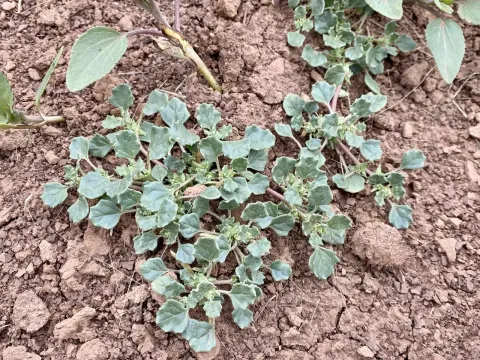
Suckleya
Suckleya
Suckleya is a genus of plants belonging to the Amaranthaceae family, primarily represented by the species Suckleya suckleyana. This plant is a succulent annual that typically thrives in environments where other vegetation faces significant survival challenges due to soil composition.
What the section contains

Suckleya
The native range of this plant is centered in the North American plains, where it commonly populates the edges of ephemeral ponds and saline depressions. It is highly adapted to fluctuating soil moisture, allowing it to colonize mudflats as they dry out during the summer season.
Botanically, Suckleya is recognized by its prostrate habit and fleshy, alternate leaves. These morphological features are characteristic of xerohalophytes, designed to conserve water while enduring the saline conditions of alkaline soils often found in its natural habitat.
Cultivation requirements involve specific light and soil conditions. The plant demands full solar exposure to complete its life cycle and is highly sensitive to competition from dense perennial grasses. Agricultural management is rarely applied due to the plant's lack of commercial value.
Economic importance is negative in a livestock context. Suckleya contains cyanogenic glycosides that can be fatal to cattle if ingested in significant quantities. Therefore, it is generally managed as a weed or a botanical hazard rather than a forage crop in rangeland management.
The plant is vulnerable to various soil-borne pathogens that target the root system in poorly drained sites. Additionally, insect pests such as leaf beetles are known to cause significant defoliation during the peak of the growing season, further suppressing its reproductive success.