
Indian bassia
Bassia indica
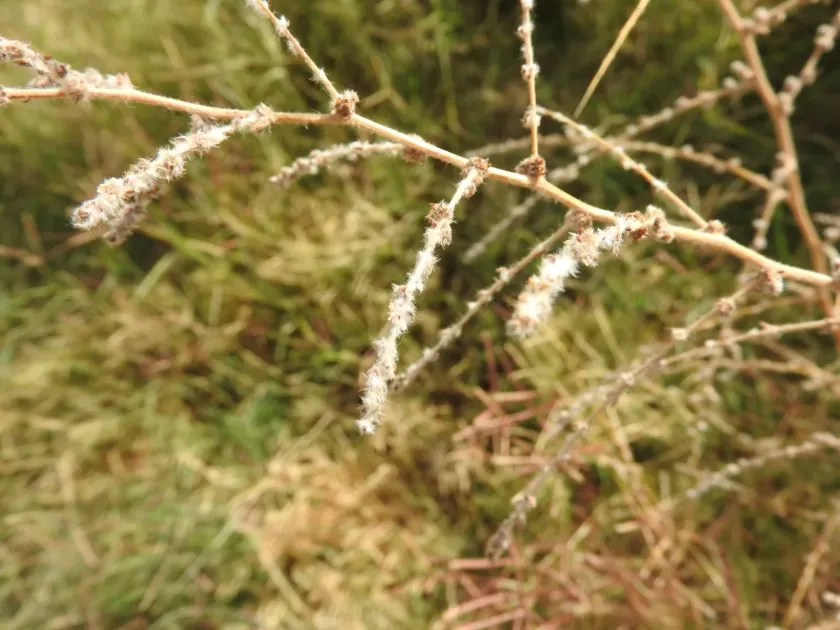
Description
Sowing dates
Indian bassia (Bassia indica), belonging to the Amaranthaceae family, is an annual plant known for its remarkable resilience. It is highly valued for its ability to thrive in challenging, arid environments where other crops fail.
Sowing should take place in the spring when soil temperatures reach 12–15 degrees Celsius. This ensures optimal germination rates and establishes a strong root system before the onset of extreme summer heat.
Due to the small size of the seeds, they should be sown at a depth of 1–2 centimeters. Rows should be spaced up to 45 centimeters apart to allow sufficient room for the plant to develop its bushy architecture.
Once established, the plant shows rapid growth, which is an effective strategy for outcompeting weeds. It occupies the space quickly, reducing the need for mechanical or chemical weed control measures.
The root system of Indian bassia is deep and robust, allowing it to extract moisture from lower soil horizons. This adaptation is crucial for its survival during prolonged drought periods.
Growing requirements
As a halophyte and xerophyte, Indian bassia is specifically adapted to saline and poor soils. It can tolerate salinity levels that would be toxic to most conventional agricultural crops.
The plant prefers sandy or loamy soils with good aeration. While it does not require high levels of nutrients, it benefits from moderate soil fertility during the initial stages of vegetative growth.
Full sun exposure is necessary for maximum biomass production. The plant thrives in high temperatures, showing optimal physiological activity between 25 and 35 degrees Celsius.
Indian bassia is highly drought-tolerant, but irrigation can significantly increase its yield. However, growers must ensure that the soil has good drainage, as waterlogging is detrimental to its health.
The optimal pH range for this species is neutral to slightly alkaline. It is highly efficient in adapting to fluctuating environmental conditions, making it a reliable choice for reclamation of degraded lands.
Main diseases and pests
Indian bassia generally exhibits good resistance to most pests; however, it can be susceptible to some foliage-feeding insects, including specific moth larvae and weevils during the seedling stage.
Root rot can occur if the plant is grown in compacted, poorly drained soil. Maintaining appropriate spacing and ensuring good soil aeration are the primary methods of preventing such fungal issues.
Powdery mildew may develop during periods of high humidity and poor ventilation. If infection occurs, fungicide treatment or cultural management to increase airflow is recommended.
Aphids can occasionally colonize young plants, leading to stunted growth. Integrated pest management strategies, focusing on biological controls, are usually sufficient to manage these populations.
- Implementing crop rotation to break pest cycles.
- Removing debris to minimize fungal reservoirs.
- Monitoring fields during the early stages of vegetation.
Harvesting
For forage purposes, harvesting should be performed during the budding phase. This stage ensures the highest protein content and nutritional value of the green biomass for livestock feeding.
Cutting should be done at a height of 5–7 centimeters. This allows the plant to recover and produce secondary growth if moisture conditions remain adequate throughout the season.
Seed harvest requires precise timing to prevent shattering, as the seeds are prone to falling once fully mature. Harvesting is typically conducted using combine harvesters during the dry stage.
Post-harvest, seeds must be cleaned and dried thoroughly to reach a moisture content below 12 percent. This is essential to prevent heating and spoilage during storage.
Beyond its use as fodder, Indian bassia is being investigated for its potential in bio-remediation of salt-affected soils. Its ability to accumulate salts makes it a functional tool for land restoration.