
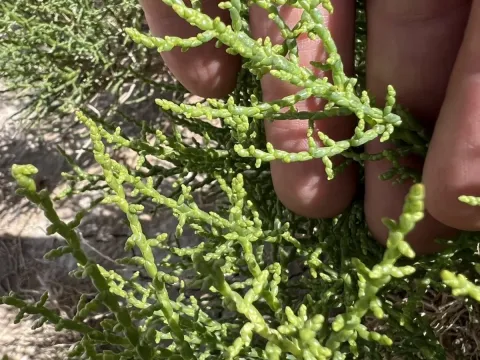
Kalidium
Kalidium
Kalidium is a genus of perennial succulent shrubs belonging to the Amaranthaceae family. These plants are true halophytes, specifically evolved to thrive in soils with extremely high salt concentrations where most common agricultural crops would fail.
What the section contains

Kalidium
Native to the arid regions of Eurasia, particularly Central Asia, Kalidium species are essential components of desert and semi-desert ecosystems. Their distribution is limited to salt marshes, salt flats, and alkali soils, which define their unique ecological niche.
The morphology of Kalidium is striking, characterized by jointed, succulent green stems that perform photosynthesis, as true leaves are often reduced or absent. This physiological adaptation minimizes water loss, which is vital for survival in harsh, dry environments.
The root system of the plant is highly robust and extensive, allowing it to penetrate deep into the substrate to extract essential moisture. This depth also provides stability in shifting desert soils, protecting the plants from wind erosion.
Requirements for cultivation include full exposure to direct sunlight and well-drained but saline soils. The plant is exceptionally hardy, demonstrating remarkable resilience to extreme temperature fluctuations between winter frosts and scorching summer heat.
Historically, Kalidium was an important source of potash, a potassium-rich salt obtained by burning the plants and processing the ash. This material was fundamental for the early glassmaking and soap production industries in the Eurasian steppes.
In modern agriculture, Kalidium serves as an important fodder crop for camels, sheep, and goats grazing in arid regions. During the winter months, when other green forage is scarce, the succulent stems provide essential nutrition and hydration for livestock.
The biomass production of Kalidium varies significantly depending on the local salt content and water availability. While not suitable for high-density farming, it acts as a valuable resource for maintaining animal husbandry in regions where no other vegetation grows.
Current research investigates the potential of Kalidium as a phytoremediator. By planting this species, land managers can effectively initiate the reclamation of abandoned or degraded salt-affected fields, improving soil structure over time.
Future applications may include the use of Kalidium biomass in sustainable energy production, specifically as a source of biofuel. Utilizing salt-tolerant species for energy allows for agricultural development on lands that would otherwise remain unproductive and barren.
The plant is relatively resistant to standard agricultural pests, as the high salinity of its tissue acts as a natural deterrent. Only highly specialized insects, such as specific species of weevils, are known to feed on its succulent tissues.
Fungal diseases are rare but can occur if the soil remains waterlogged for extended periods. Because Kalidium is adapted to arid saline conditions, excessive freshwater irrigation or poor drainage can cause root rot and weaken the plant's health.
Overgrazing represents a significant threat to Kalidium populations. When livestock pressure exceeds the natural regeneration rate of the shrubs, the soil becomes exposed to wind erosion, leading to a permanent loss of vegetation cover and soil degradation.
Anthropogenic impact, including the removal of native shrubs for commercial use, can disrupt the fragile desert balance. Sustainable harvesting practices are mandatory to ensure that the plant continues to provide ecosystem services and soil protection.
Climate change and shifting rainfall patterns may also affect the distribution of Kalidium. As a specialized halophyte, it is sensitive to drastic changes in soil salinity levels, which can occur if heavy rainfall flushes the salts from the upper soil layers.