
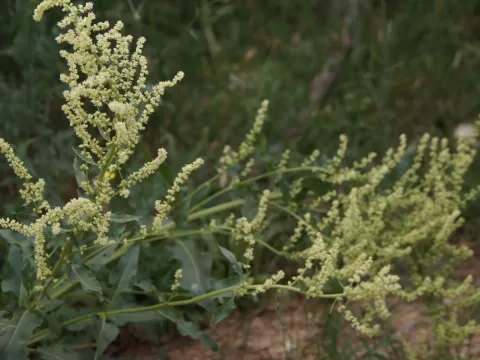
Three-styled beet
Beta trigyna
The Three-styled beet (Beta trigyna) is a perennial herbaceous plant belonging to the Amaranthaceae family, known for its robustness and wild origins.
What the section contains
Three-styled beet
Sowing should take place in early spring once the soil temperature consistently reaches 8–10 degrees Celsius to ensure rapid germination.
The seeds must be planted at a shallow depth of 2 to 3 centimeters, which is ideal for the successful emergence of sprouts in open field conditions.
Row spacing is typically maintained at 45 to 60 centimeters to facilitate mechanical weed control and maintain proper aeration for the root system.
During the initial growth stages, maintaining a weed-free environment is critical for the plants to establish a strong root network without competition.
This species thrives in well-drained, fertile soils with a neutral or slightly alkaline pH, avoiding any areas prone to seasonal waterlogging.
Beta trigyna is notably drought-tolerant, making it well-suited for cultivation in regions where water availability might be limited during the summer months.
The plant requires full sun exposure to maximize photosynthesis and promote the development of a vigorous, nutrient-rich vegetative mass.
Soil preparation should include deep plowing to allow the root system to expand fully, as this contributes to the overall health and longevity of the plant.
Balanced fertilization, particularly with potassium and phosphorus, supports the structural integrity of the plant and improves its resistance to stress.
Root rot is the most significant threat to this crop, typically occurring in poorly drained soils or during periods of excessive rainfall.
Beet leaf miners and aphids are common pests that can cause significant damage to the foliage, necessitating regular scouting and targeted intervention.
Powdery mildew often appears during periods of high humidity and poor air circulation within the plant canopy, requiring immediate fungicidal treatment.
Crop rotation is an essential management tool, preventing the accumulation of soil-borne pathogens that commonly affect Beta species.
Producers must also be vigilant against leaf spot diseases, which can rapidly diminish crop yields if not managed early in the infection cycle.