
Thellung's amaranth
Amaranthus thellungianus
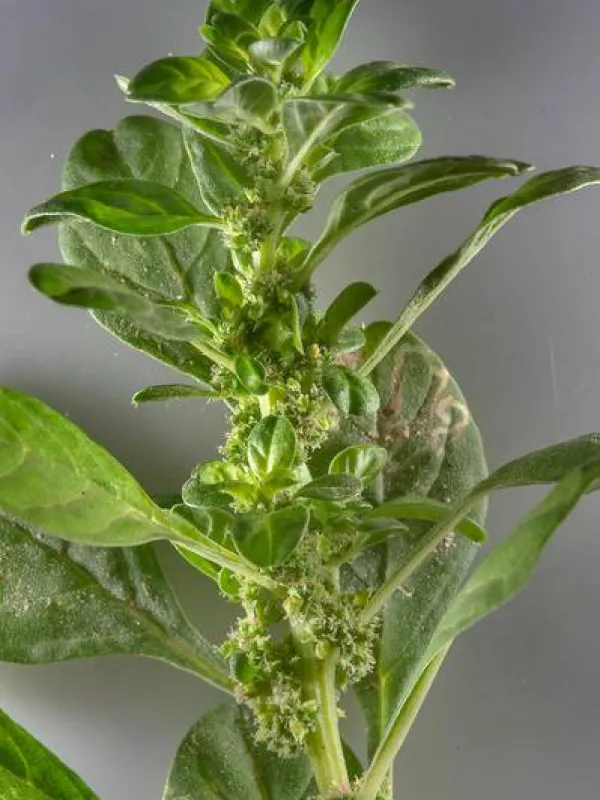
Description
Sowing dates
Thellung's amaranth (Amaranthus thellungianus), a member of the Amaranthaceae family, is a heat-loving annual crop. Optimal sowing occurs when the soil temperature at a depth of 5–10 cm reaches +12…+14°C, which typically corresponds to the late spring planting window.
Given its tiny seeds, precision sowing and a well-prepared seedbed are essential. After sowing, light rolling is recommended to ensure firm contact between the seeds and moist soil, which is critical for uniform germination.
Seeding rates should be adjusted according to the intended use: higher densities are preferred for biomass/forage production, whereas lower densities are necessary when cultivating for grain yield to allow for robust plant development.
The crop grows vigorously in the early stages, but it remains sensitive to weed competition. Effective inter-row cultivation is required during the initial weeks to ensure the plants establish before the canopy closes.
As a light-demanding species, Amaranthus thellungianus should be planted in open, sunny fields. Shade or insufficient light exposure significantly hinders vegetative growth and overall productivity.
Growing requirements
The crop exhibits high drought tolerance once its root system is well established. However, reliable moisture during the first half of the season is vital to maximize biomass output.
Thellung's amaranth thrives in fertile loam or chernozem soils with a neutral pH. It performs poorly in waterlogged environments and requires well-drained conditions to avoid root rot and nutrient stress.
Nutrient management is key; while nitrogen promotes lush vegetative growth, excessive fertilization should be avoided as it may lead to nitrate accumulation, especially in fodder crops.
The ideal temperature for active growth ranges from +22°C to +30°C. Development slows significantly below +10°C, and young plants are highly susceptible to frost damage, necessitating careful monitoring of local forecasts.
Utilizing C4 photosynthesis, this species efficiently converts sunlight into biomass even in high-temperature conditions, making it an excellent candidate for semi-arid regions and warmer climates.
Yield
Yields of green biomass can reach 30–50 tonnes per hectare, providing high-quality protein for livestock feed. The crop is valued for its nutritional profile which enhances the digestibility of feed rations.
Grain production typically yields between 1 and 2 tonnes per hectare. The seeds are highly prized for their amino acid balance, particularly their high lysine content, making them valuable for health-conscious food markets.
Economic applications include milling the grain for gluten-free flour, extracting oil, and utilizing the plant as a green manure crop to improve soil structure and suppress soil-borne pests.
Due to its rapid accumulation of organic matter, this crop serves as an excellent rotation partner, improving overall field health and soil fertility for subsequent grain crops.
- High-quality protein forage
- Excellent nutritional density in grains
- Efficient soil remediation qualities
- Sustainable agricultural alternative
Main diseases and pests
Key pests include aphids, weevils, and various species of armyworms, which can cause significant damage to foliage and developing inflorescences during the peak flowering stage.
Disease pressure is primarily linked to root rots and Fusarium wilt, particularly in fields with poor drainage or where crop rotation practices are neglected. Maintaining spatial isolation is advised.
Preventative measures center on using certified, high-quality seed and ensuring optimal stand density. Reducing moisture stress within the canopy can also decrease the risk of fungal proliferation.
Weed control is primarily mechanical, as chemical herbicide options for amaranth species can be limited. Timely cultivation between rows remains the most effective strategy for early-season protection.
If chemical intervention becomes necessary due to severe outbreaks, only products explicitly registered for amaranth and compatible with the intended final use (food vs. feed) should be applied.
Harvesting
Harvesting for biomass is optimally performed during the flowering phase. This timing captures the plant at its peak nutritional value, ensuring higher protein and fiber digestibility for livestock.
Grain harvest occurs upon physiological maturity, when the panicles change color and seeds become hard. A direct-combining method is usually the most efficient approach for large-scale operations.
Post-harvest moisture management is essential; seeds should be dried to 12–14% to ensure long-term storage stability. Caution is needed during drying to prevent heat damage to the delicate seeds.
Crop residues are a valuable asset and should be incorporated back into the soil. They decompose rapidly, enriching the topsoil with essential nitrogen and organic carbon.
Timely harvesting is critical to prevent grain shattering and to minimize quality loss from weather exposure, ensuring the harvested material meets required food or feed standards.