
Traganum
Traganum
Traganum is a genus of flowering plants belonging to the Amaranthaceae family, specifically adapted to extremely arid and saline environments. These perennial shrubs are essential components of the vegetation in desert zones, particularly in North Africa and the Middle East.
What the section contains


Traganum
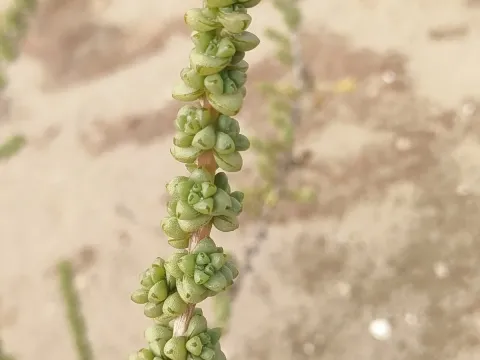
Botanically, Traganum plants are characterized by their succulent, fleshy leaves that store moisture, allowing them to withstand prolonged droughts. They typically grow in sandy, gravelly, or saline soils where traditional crop cultivation is physically impossible.
Climate requirements for this plant are centered around high temperatures and significant sunlight exposure. The species thrive in regions with minimal annual rainfall and are highly tolerant of the high salt content found in desert substrates.
Regarding agrotechnical practices, Traganum is rarely sown as a commercial crop in the traditional sense; instead, it is managed as a wild-growing forage resource. Successful growth depends on maintaining the soil structure and ensuring natural soil drainage to prevent root diseases.
In terms of agricultural use, Traganum serves as a vital forage source for camels, sheep, and goats. It provides essential nutrients during the harsh summer months when other vegetation becomes unavailable, playing a key role in nomadic and semi-nomadic pastoral economies.
The main threats to Traganum populations are primarily related to human impact, specifically overgrazing and land clearing for development. When the carrying capacity of desert rangelands is exceeded, these plants can disappear, leading to rapid soil erosion.
The plant is naturally resistant to most common crop pests due to its high salt content, which serves as a chemical deterrent. However, under non-native or disturbed conditions, soil-borne fungi may develop if the plants are exposed to improper irrigation.
Desert locusts represent a periodic threat, as they can feed on the green biomass during infestation cycles. Nevertheless, the rapid regenerative capacity of the shrubs often allows them to recover once the pressure from pests subsides.
Effective management requires the implementation of rotational grazing systems to prevent local extinction of the shrub. Protecting the habitat from physical degradation remains the most effective form of plant defense.
Sustainable conservation efforts for Traganum are linked to desertification control. By maintaining healthy populations, land managers can effectively stabilize sand dunes and prevent the further expansion of barren, unproductive desert regions.