
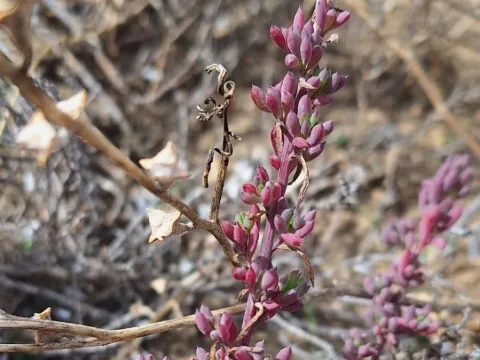
Threlkeldia
Threlkeldia
Threlkeldia belongs to the Amaranthaceae family, formerly classified within the Chenopodiaceae. This genus consists of succulent subshrubs that have evolved as typical representatives of the halophytic flora native to Australia.
What the section contains

Threlkeldia
The crop possesses exceptional adaptation capabilities for extremely arid conditions and saline soils. It is capable of thriving in environments where most agricultural crops would perish due to high osmotic stress and lack of moisture.
For optimal development, the plant requires well-drained soils with high salt content. The root system of Threlkeldia is capable of deep penetration, allowing the plant to access moisture from sub-surface layers during prolonged drought periods.
Threlkeldia prefers open, sunny areas with no shading. It demonstrates high tolerance to alkaline soil conditions and does not require intensive fertilization, as it has adapted to environments poor in essential nutrients.
Agricultural management of the plant consists primarily of minimal intervention, as it is a natural component of pasture ecosystems. The main objective for an agronomist is to maintain optimal population density to prevent soil degradation.
The economic value of Threlkeldia is concentrated in the grazing livestock sector. It serves as a vital reserve source of fodder for sheep and cattle during dry seasons when traditional vegetation withers.
The biomass yield is directly dependent on rainfall levels and the degree of soil salinity in the area. In favorable years, the crop can provide stable biomass growth rich in essential minerals and salts.
The nutritional value of the plant remains intact even during periods of physiological dormancy. Due to its succulent leaves, Threlkeldia remains succulent, making it an essential water source for livestock in regions where drinking water is scarce.
The biological productivity of the crop makes it useful for land restoration projects. The plant colonizes barren areas rapidly, effectively mitigating wind erosion in arid and semi-arid regions.
Intensive grazing management requires rotational systems to prevent the exhaustion of the plant's root system. When grazing pressure is managed correctly, the crop shows excellent self-regeneration capacity and can be exploited over many years.