
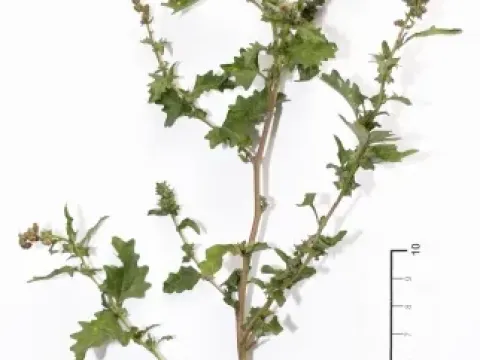
Tornabene saltbush
Atriplex tornabenei
Tornabene saltbush seeds are sown in early spring as soon as the topsoil reaches a temperature of +8...+10 degrees Celsius. To ensure uniform emergence, the seeds should be planted at a depth of no more than 1-2 centimeters, as they possess high germination energy.
What the section contains
Tornabene saltbush
In arid regions, sowing is carried out as early as possible to make the most of residual winter moisture in the soil. Early planting also allows the plant to develop a strong root system before the onset of summer heat and rainfall shortages.
The seeding rate depends on the cultivation method but averages 8–12 kg per hectare for row seeding. It is crucial to ensure firm contact between the seeds and moist soil by rolling the field after the sowing process is completed.
The crop is known for its ability to rapidly accumulate vegetative biomass, so over-dense sowing is not recommended. An optimal spacing of 30–45 centimeters between rows facilitates weed management and improves soil aeration.
Under irrigated conditions, sequential plantings of saltbush are possible during the summer, allowing for two harvests of green mass within a single growing season.
Tornabene saltbush is a typical halophyte belonging to the Amaranthaceae family, which thrives in saline soils. It demonstrates a high tolerance to elevated salt content in both groundwater and soil complexes.
The crop is highly light-demanding, so it should be planted in open, well-warmed areas. Shading is detrimental to the plant, leading to stem elongation and a sharp decline in the quality of the produced biomass.
Saltbush is not highly demanding regarding soil texture, succeeding in both light sandy loams and heavy clay soils. The only critical factor is the absence of prolonged waterlogging, which can inhibit the root system.
The optimal pH range for this crop is between 6.5 and 8.5. While it can withstand temporary droughts, productivity of green mass increases significantly with adequate moisture availability.
Due to its ecological plasticity, Tornabene saltbush can serve as a remediation crop for reclaiming degraded or secondarily salinized agricultural lands.
The green mass yield of Tornabene saltbush depends directly on the agronomic management and moisture availability during critical growth stages. With intensive cultivation technology, one can obtain up to 30–45 tons of green mass per hectare.
Maximum dry matter yield is achieved by harvesting the plants at the beginning of the flowering phase. During this period, the leaves and stems concentrate the highest levels of nutrients, including proteins and mineral elements.
A key factor in increasing yield is the application of nitrogen fertilizers during early growth stages, which stimulates active vegetative development. With excessive nitrogen supply, it is necessary to monitor nutrient balance to prevent nitrate accumulation.
Saltbush responds well to micronutrient applications, particularly those containing magnesium and sulfur, which favorably impact the plant's photosynthetic activity. Trials suggest that foliar fertilization can increase total yield by 15–20%.
Seed production is also quite high, which allows for both self-sufficiency in sowing material and the utilization of seeds as a valuable protein-rich source for poultry feed.
Tornabene saltbush exhibits high resistance to most typical agricultural crop diseases. However, in conditions of high humidity and poor agronomic practice, crops may be susceptible to powdery mildew.
Among pests, leaf-damaging insects such as leafminers or certain aphid species pose the greatest risk. Regular crop monitoring allows for the early detection of infestation centers and their effective containment.
Root rot occurs very rarely and is usually associated with soil waterlogging caused by improper irrigation or poor field drainage. Adhering to crop rotation remains the best prevention against the buildup of soil pathogens.
Stem-boring or chewing pests are more likely to attack young plants during the seedling stage. During this period, it is important to observe the state of the crops and apply biological insecticides if necessary.
Given the crop's attractiveness to various insects, an integrated pest management system, including the promotion of beneficial entomofauna on field edges, is strongly recommended.
Harvesting for green mass should be conducted before active seed maturation begins, as stem lignification increases significantly after flowering. The optimal time is when the plant reaches its maximum height before shedding its lower leaves.
Standard forage harvesters or mowers are used to ensure a uniform cut. A cutting height of 5–8 centimeters above the soil surface is recommended to allow for the regrowth of lateral shoots.
Freshly cut biomass must be transported quickly to processing or drying facilities to prevent spontaneous heating and loss of nutritional properties. In dry, sunny weather, wilting occurs relatively quickly due to the high dry matter content.
If the goal is seed production, harvesting is performed in two phases: windrowing followed by threshing once the crop has dried. This minimizes losses of valuable seeds, which are prone to shattering if left standing too long.
After harvest, plant residues should be shredded and incorporated into the soil as green manure, which significantly improves soil physical and chemical properties and increases organic carbon content.