
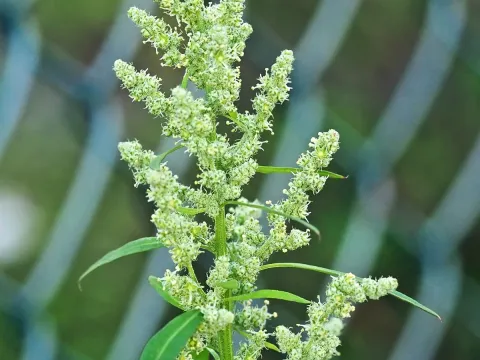
Swedish goosefoot
Chenopodium suecicum
Swedish goosefoot is an annual herbaceous plant belonging to the Amaranthaceae family. While often identified as an agricultural weed, it holds potential as a valuable fodder or cover crop due to its high nutritional content and ability to biomass accumulation in diverse soil conditions.
What the section contains
Swedish goosefoot
Seed germination typically begins in early spring when soil temperatures reach 5–8 degrees Celsius. The optimal sowing window is mid-April, allowing the plant to establish a robust root system before the onset of summer heat, which can negatively impact the development of later-sown crops.
For cultivation, seeds are sown in finely prepared soil at a depth of 1–2 centimeters. Given their small size, mechanical rolling after sowing is essential to ensure proper seed-to-soil contact, facilitating moisture absorption and promoting uniform germination even under slightly dry conditions.
The plant exhibits high growth vigor, allowing it to compete effectively with other vegetation in the field. Seedlings are resilient to light spring frosts, a trait that makes this species particularly adaptable to the variable climatic conditions of northern and temperate regions.
When used as a green manure or fodder crop, it is sown in rows with spacing between 15 and 30 centimeters. This density promotes rapid canopy closure, which suppresses competitive weed growth and protects the soil surface from erosion and moisture loss during the early growth stages.
Swedish goosefoot thrives in fertile loam and sandy loam soils with adequate nitrogen levels. It is adaptable to a variety of pH levels, though it performs best in neutral to slightly acidic soils, where nutrient availability is optimal for rapid biomass production.
Climatic requirements focus on moderate rainfall and cool to temperate conditions. The plant is highly plastic, capable of adapting to a wide range of environments from forest-steppe zones to more northern latitudes, provided that moisture is not a limiting factor during the peak growth phase.
Agronomic management includes the application of nitrogenous and phosphate fertilizers, which significantly boost growth rates and overall yield. Being highly responsive to nutrient availability, the crop can be used to effectively draw up deep-seated minerals, cycling them back to the topsoil layer.
Regular inter-row cultivation is beneficial, especially in heavier soil types where surface crusting may occur after heavy rains. This practice improves soil aeration and water infiltration, which are critical for maintaining healthy root development and preventing premature plant stress.
Maintaining proper water balance is important during the initial weeks of development. While the mature plant is moderately drought-tolerant, seedlings require consistent soil moisture to thrive, making irrigation or careful selection of sowing timing essential in regions with low early-spring rainfall.
The potential yield of green biomass ranges from 15 to 30 tons per hectare, depending on soil fertility, moisture availability, and plant population density. High yields are achievable through well-timed sowing and the maintenance of an optimal nitrogen balance within the field.
To maximize nutritional value, harvesting should occur during the budding phase before the onset of lignification in the stems. At this stage, the plant has the highest concentration of protein and essential minerals, making it an excellent candidate for livestock fodder supplements.
Seed productivity is substantial, allowing for high self-seeding capability or efficient harvest of planting material. Close monitoring of seed maturity is required to avoid yield losses due to shattering, especially if the crop is intended for commercial seed production or storage.
Optimizing plant density is key to yield management. Proper spacing ensures even distribution of sunlight across the canopy, preventing shading-induced senescence of lower leaves and ensuring consistent biomass development across the entire cultivated area of the field.
Crop rotation plays a significant role in determining final yields. Cultivating Swedish goosefoot after cereals or other clean-tilled crops allows for better establishment, as there is less competition for light and water from perennial weeds during the early developmental phases.
Common diseases affecting Swedish goosefoot include downy mildew and powdery mildew, which thrive in high-humidity conditions or overly dense stands. These fungal pathogens cause leaf discoloration and premature foliage loss, significantly reducing the quality and mass of the harvested fodder.
Pests such as aphids and leaf-mining insects can cause considerable damage by feeding on plant sap and tissue, which stunts growth and creates entry points for secondary infections. Integrated pest management using biological controls or targeted insecticides is often necessary in high-pressure years.
Root rot represents a threat in poorly drained or waterlogged soils. Preventing soil saturation through proper land leveling and ensuring good drainage are primary preventative measures, alongside maintaining a crop rotation schedule that limits the buildup of soil-borne pathogens.
Young seedlings may be vulnerable to crucifer beetles in early spring. Protecting the crop during the first few weeks is crucial for maintaining the desired plant population. Early monitoring and prompt action when pest thresholds are reached will prevent significant yield depletion.
Sanitation practices are vital to disease control. Using pathogen-free seed and cleaning machinery between fields help prevent the spread of diseases and pests. A well-managed rotation that avoids continuous cultivation of Amaranthaceae species will minimize infection risks significantly.
For fodder purposes, harvesting is conducted during the full flowering stage using standard forage harvesters or mowers equipped with choppers. Prompt collection and processing are essential to maintain high digestibility and nutrient content before the stems become too fibrous.
Seed harvest is typically performed using combine harvesters when the seeds reach maturity but before they begin to shatter naturally. Adjusting combine settings—specifically wind speed and drum rotation—is critical to prevent seed damage while ensuring thorough separation from plant debris.
Wilting the cut green mass in the field for several hours is a recommended step before ensiling. This practice reduces the moisture content to optimal levels, which enhances the fermentation process and prevents spoilage or mold growth during long-term storage in silos or stacks.
Post-harvest seed cleaning is performed using specialized machinery to remove chaff and field debris. Achieving a clean product is necessary to maintain quality standards and prevent the introduction of impurities or pathogens into the next planting cycle.
Storing harvested seeds requires cool, dry, and well-ventilated conditions to prevent heating or moisture-induced spoilage. Maintaining a seed moisture content below 14 percent is crucial to preserve germination rates and ensure the viability of the seed stock for future sowing seasons.