
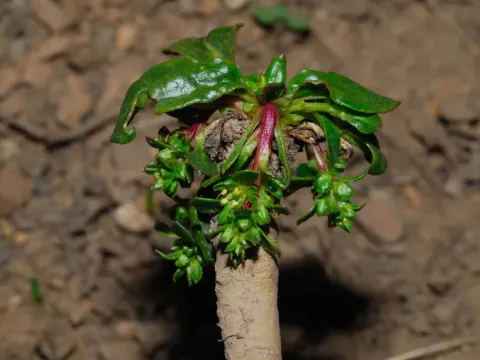
Dwarf beet
Beta nana
Dwarf beet (Beta nana) is a rare perennial herbaceous plant that belongs to the Amaranthaceae family. It is a distinct species geographically restricted to high-altitude mountain ranges in Greece, particularly in rocky limestone environments.
What the section contains
Dwarf beet
Botanically, Beta nana is characterized by its small, compact rosette structure, which serves as a survival mechanism against harsh alpine winds and low temperatures. This growth habit allows it to maintain resources efficiently in nutrient-poor soils.
The ecological requirements of the species involve specific lithological conditions, primarily preferring limestone substrates. It thrives in well-drained, stony habitats where it can establish its root system within rock crevices.
Climate adaptation is a key factor for this species, as it requires a distinct alpine climate with significant seasonal fluctuations. Unlike common beetroot crops, it has not been domesticated and remains a wild species adapted to high-stress environments.
From a horticultural and agricultural perspective, the species is primarily of interest for research regarding genetic diversity. It serves as a valuable resource for breeders looking to identify stress-tolerance traits in the genus Beta.