
Enchylaena
Enchylaena
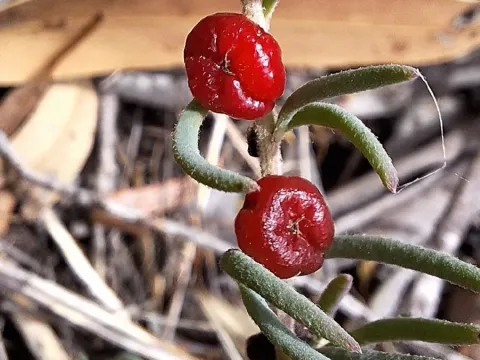
Enchylaena (Enchylaena tomentosa) is a resilient perennial subshrub belonging to the Amaranthaceae family, native to the arid and semi-arid landscapes of Australia.
What the section contains

Enchylaena
The plant is highly regarded for its exceptional drought tolerance and its ability to thrive in saline soils where common agricultural crops would fail completely.
Botanically, it is characterized by succulent, fleshy leaves that store moisture and minerals, functioning as an essential reservoir of nutrients during harsh dry seasons.
It prefers well-drained soil profiles, including sandy or loamy textures, and requires high solar exposure to maintain its metabolic processes and structural integrity.
Effective management of the crop involves selecting sites that allow for deep root development, which is critical for accessing residual moisture during extended rainless periods.
The primary agricultural use of Enchylaena is as a reliable forage source for sheep and cattle, especially in rangelands where water and quality feed are scarce.
The nutritional profile of this shrub provides livestock with important minerals, making it a functional component of a diversified grazing diet in difficult environments.
In terms of production, the plant is typically utilized through managed grazing rather than mechanical harvesting, ensuring the plant remains viable for long-term survival.
Sustainable yield levels are maintained by ensuring that the grazing intensity does not exceed the plant's ability to regenerate its vegetative biomass during favorable weather.
Research indicates that integrating Enchylaena into pasture systems enhances the resilience of livestock operations by providing a buffer against seasonal feed shortages.
The most significant threat to Enchylaena populations is overgrazing, which prevents the plant from setting seeds and replenishing its population density in the ecosystem.
While relatively robust, the plant can fall victim to fungal pathogens when stagnant humidity levels persist, which can lead to decay of the succulent stem tissues.
Various insects and larvae can cause damage to leaves and stems, and although these impacts are often localized, they can affect the total biomass output in severe cases.
Encroachment by invasive, non-native plant species remains a major concern, as they often outcompete Enchylaena for essential water and soil nutrient resources.
To preserve these stands, producers should employ rotational grazing practices that offer adequate rest periods, allowing the shrub to fully recover and maintain its health.