
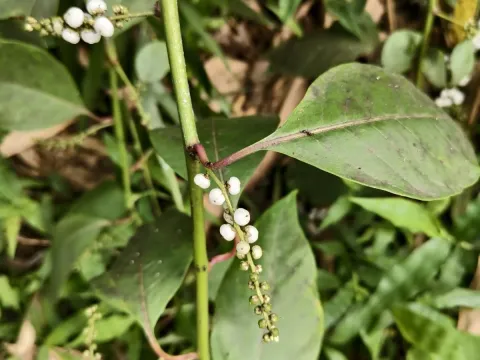
Deeringia
Deeringia
Deeringia is a genus of flowering plants belonging to the Amaranthaceae family, typically represented by climbing shrubs or trailing vines. These plants are native to the tropical regions of Asia, Australia, and the Pacific islands.
What the section contains


Deeringia
From an agricultural perspective, the plant requires consistent tropical temperatures. It thrives in environments where temperatures do not drop below 15°C, making it suitable for greenhouses or tropical zones.
Soil requirements focus on well-draining, nutrient-rich mediums. A mix of peat, loam, and coarse sand provides the optimal balance of moisture retention and aeration required for healthy root growth.
Light intensity is critical for Deeringia. While it prefers bright, indirect sunlight, it should be protected from intense mid-day sun, which can cause leaf scorch in younger specimens.
Water management involves keeping the soil consistently moist but never waterlogged. During the growing season, moderate fertilization with a balanced liquid feed helps support the vigorous growth of the vine.
Common pests affecting Deeringia include spider mites, mealybugs, and aphids, which frequently colonize the undersides of the leaves, causing wilting and stunted growth.
Fungal pathogens such as those causing root rot pose a significant threat when soil drainage is poor. Overwatering is the primary factor leading to the proliferation of such infections.
Powdery mildew can occur if air circulation is insufficient. Maintaining adequate ventilation in the growing area is essential for preventing fungal spore germination.
Proactive monitoring is vital. Agricultural professionals should inspect the foliage weekly to catch the early stages of infestation before they spread throughout the greenhouse.
Biological control methods, such as introducing predatory mites or lacewings, are recommended for sustainable management in indoor and protected cultivation settings.