
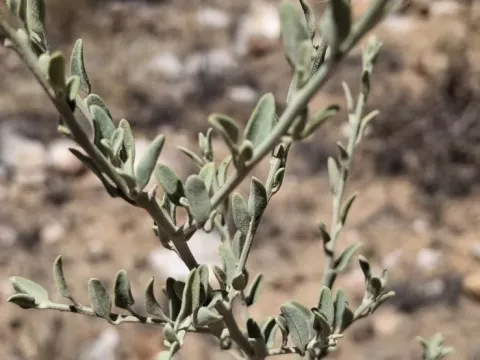
Desert goosefoot
Chenopodium eremaeum
Sowing of Chenopodium eremaeum is carried out in early spring when soil temperatures reach 8–10 degrees Celsius. Seeds are sown at a depth of 1–2 centimeters to ensure even germination in dry soil conditions.
What the section contains
Desert goosefoot
The crop exhibits high germination energy, allowing it to compete effectively with weeds in the early growth stages without the intensive use of herbicides.
Optimal planting involves a row-crop pattern with a spacing of 45–60 centimeters, which allows for better root development and optimizes the plant's access to nutrients.
The seeding rate is typically set at 6–8 kilograms per hectare, depending on the field germination percentage and the level of soil preparation before planting.
Compacting the soil after sowing is a critical agronomic practice, as it improves the capillary rise of water to the seeds, which is essential for survival in arid environments.
Chenopodium eremaeum is a true xerophyte, specifically adapted to the harsh conditions of semi-deserts and dry steppes where water scarcity is the primary limiting factor.
It performs best on light, sandy, or sandy-loam soils with a neutral or alkaline pH, where poor drainage is avoided to maintain healthy root respiration.
The crop is highly light-demanding; any shading during the growth period significantly reduces photosynthetic activity and the overall accumulation of vegetative biomass.
Temperatures between 20 and 30 degrees Celsius are optimal for growth, although the plant displays remarkable endurance against the extreme heat of arid zones.
Soil management should focus on moisture conservation, involving deep autumn plowing followed by minimal spring surface cultivation to prepare the seedbed.
The potential yield of desert goosefoot is primarily determined by seasonal precipitation and the accumulation of active temperatures throughout the growing period.
Under extensive cultivation, farmers can expect approximately 100–150 centners of green mass per hectare, providing a reliable fodder source in degraded lands.
Seed productivity remains stable, typically ranging from 8 to 12 centners per hectare, which is sufficient for both local farm use and potential seed trade.
The strategic application of nitrogen fertilizers can improve biomass yields by 20–30 percent, provided there is enough soil moisture to facilitate nutrient uptake.
As a rotation crop, Chenopodium eremaeum improves soil structure and promotes organic matter accumulation through its dense and deep root system.
The primary pests include various species of flea beetles that target young seedlings during the cotyledon and first leaf stages, potentially reducing stand density.
Diseases like downy mildew may occur in rare instances of high humidity or poor ventilation, necessitating preventative measures to ensure crop health.
Larvae of the beet fly may occasionally feed on leaf tissues, which compromises the surface area available for photosynthesis and decreases overall crop vigor.
Integrated pest management strategies, including crop rotation and the destruction of host weeds, are the most effective ways to maintain high plant health standards.
Seed treatment before sowing is highly recommended as it provides early protection against soil-borne pathogens and common agricultural pests.
Harvesting for green fodder should occur during the full flowering stage, as this represents the peak period for nutrient concentration within the leaves and stems.
Seed harvest is conducted when the plants reach full waxy ripeness, indicated by a characteristic color change in the seed heads to a tan or light brown hue.
A two-stage harvesting process is recommended: mowing into windrows followed by threshing after drying, which significantly minimizes losses due to seed shattering.
Post-harvest processing includes thorough cleaning and drying of the seeds to a moisture content of 12–14 percent to ensure long-term stability in storage.
Quality control during sorting and calibration ensures that the seed lots are uniform, which is vital for achieving high-quality stands in the subsequent growing season.