
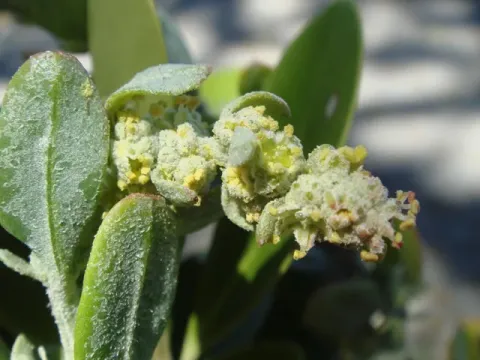
Exomis
Exomis
Exomis, represented primarily by Exomis microphylla, is an arid-adapted plant that requires specific thermal conditions for optimal germination.
What the section contains

Exomis
Sowing should be timed to coincide with the arrival of stable spring temperatures, ensuring that the soil is sufficiently warm to support development.
The seeds are relatively small and should be sown at a shallow depth, ensuring they are placed in contact with finely prepared, moist soil.
A well-draining seedbed is essential to prevent seed rot, especially if local weather conditions are unpredictable during the early spring planting window.
In regions where direct seeding is difficult, greenhouse propagation followed by hardening off before transplantation is a viable agricultural strategy.
This genus belongs to the Amaranthaceae family and is well-known for its physiological adaptations to drought and nutrient-poor sandy soils.
Exomis plants thrive in full sun and require high light intensity to maintain their structural integrity and vigorous vegetative growth patterns.
The soil profile must be loose and airy, as the root system is sensitive to waterlogging, which often leads to rapid decay in compacted clay substrates.
It is remarkably tolerant of saline or alkaline conditions, making it a suitable candidate for marginal lands where other crops fail to establish.
Temperature management is critical; while it handles heat well, it requires protection from severe frost to survive and remain productive year-round.
The primary threats to Exomis are related to soil-borne pathogens, particularly root rot triggered by poor drainage and excessive moisture.
Pest pressure is generally low, but in sheltered or greenhouse environments, aphids and spider mites can occasionally infest new vegetative shoots.
Powdery mildew may develop in areas with high humidity and stagnant air, making proper ventilation a key requirement for maintaining plant health.
Regular monitoring for wilting or leaf discoloration is advised, as these are often the first signs of physiological stress or subterranean fungal activity.
Integrated pest management, focusing on proper irrigation scheduling and weed control, is sufficient to maintain a healthy and robust plant population.